Imagine this: We have reached a point in modern technology where we have eradicated aging as one of the causes leading to death. We can now use technology to augment our bodies and our minds. We can merge ourselves with machines, creating a new version of ourselves – the human-machine.
As utopian as it sounds, it is certain and I am not referring to some sci-fi movie. In fact, I just presented to you some of the possibilities of what our future world could look like in a transhumanist society - but what is transhumanism and what benefit can it be to us humans – mere vulnerable bodies of flesh and blood.
Futurists such as Mark O’Connell are consumed with such questions. In his book “To Be a Machine”, he summarises the future of transhumanism, which has now become a movement. While the book gives its readers a gonzo-journalistic tour of transhumanism and radical life extension, it also pushes the limits of our biology with technology. At times, the details can become rather terrifying when you are asked to imagine the human body as an outmoded device, yet it is tempting to know more, and hard to ignore.
What does it mean to be a super-human?
My curiosity took me to transhumanist Dr Avinash Singh, a cybernetics researcher at the University of Technology Sydney and founder of the India Future Society.
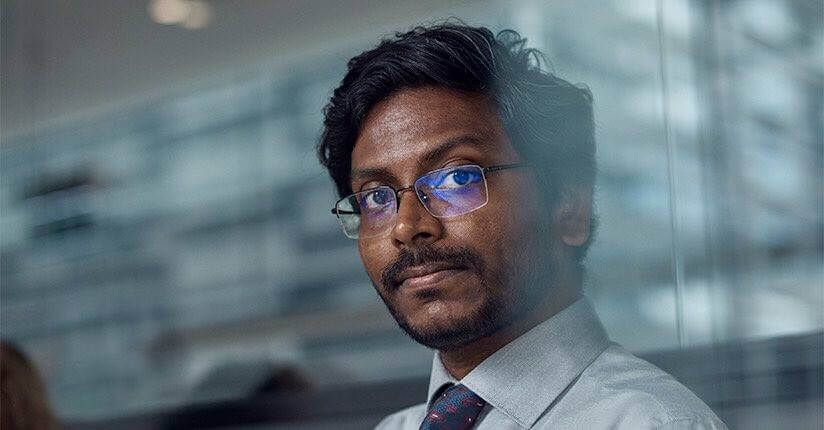
I talked to him about the movement and what being a human-machine meant, and whether we had already started the journey towards humans transitioning into a machine.
Avinash, who specialises in Brain-Computer Interface (BCI), artificial intelligence (AI) and machine learning, explained to me that the transhumanism movement was a three-stage process: human to trans-human, and finally to post-human. If we assess the transformative impact of current technological advancements on human lives, he added, it can be easily argued that we are in the transition of merging stages 1 and 2. He gives an example of a smartphone that is more or less an extension of our memory storage.
“Can you imagine parting with your smartphones now?” he asked me, “wouldn’t it feel as we are missing a part of our body?”
He explained that human merger with technology between stages 2 and 3 will make us superhuman. By ‘merging’, he clarified, he was referring to reaching a stage of singularity where machine and human become a singular entity – not two, but one.
I confessed to him that I cannot seem to part with my smartphone, and whether that makes me a cyborg? Though my question gave him a chuckle, to my disappointment his response was a ‘no’.
Mind over body
During our talk, I noted that Avinash used the words ‘cognition’ and ‘intelligence’ multiple times, so I asked him if transhumanism was all about mind and consciousness, and not that much about the body.
“That's not true. Transhumanism applies to both mind and body,” he responded, further explaining that there will come a time when the body will become disposable and we will be able to upload our consciousness to a computer, later transferring it into a body of our choice.
“With the right technology, we can switch over to different bodies using the same brain function – making us practically immortal.”
This is where it started to sound more like a script of some futuristic cyberpunk film, and I exclaimed reflexively, “Like Altered Carbon!” This sparked a discussion about longevity.
Can we live forever?
Aninash explained that through BCI we can enhance our existing physical abilities, including slowing down the aging process – even stopping it altogether. The focus is on the brain. Bodies are changeable, he reiterated.
Longevity is one of the focal points of transhumanism, but the concept itself is not new. For thousands of years, humans have tried, one way or the other, to live longer. Qin Shi Huang, the first emperor of the Qin dynasty, wanted to live forever. He even commissioned an executive order to search for a potion that would give him eternal life. Ironically, the very elixir of immortality that was made by his alchemists became the cause of his death at the age of 50. In 11th century Japan, the Shingon Buddhism monks practiced self-mummification or Sokushinbutsu for longer lives. In 1879, it was banned by Emperor Meiji, the 122nd king of Japan.
While these attempts at immortality went futile, the scientific and technological advancement, however, has increased the average human life expectancy from 30-40 years some 5000 years ago to roughly 84 years in 2021. Dr Singh told me he believes that a 100 years later, we may look back in time and feel bad for letting humans die so early. For us, living longer or forever is a radical desire because in most religions around the world, only god is immortal. Though, Dr Singh warns not to confuse the line between longevity and immortality. While we may be still far from eliminating death from our lives, he said a large population of humans wanted to live longer, and healthier of course. He mentioned Liz Parrish, CEO of BioViva, a Seattle-based biotech company working to develop treatments to slow the ageing process through gene therapy. He paused for a moment and then continued to tell me how he had seen a noticeable difference in her the two times he met her, before and after her own gene therapy. I later searched her up on the Internet and found that she is her own first anti-aging experiment. I also found that a complete cycle of therapy starts from US $1 million, and can reverse aging by up to 20 years.
Liz's case reminded me of some cases where people are working on options of freezing their bodies through cryogenic preservation to wake up in the future. I asked Avinash what significant concerns transhumanists were facing about the ethical implications of the future of transhumanism and post humanism. Who gets the right to live, and who doesn't? Who can age and who cannot? Is digital immortality for everyone?
His answer was as I had expected: the rich will get access to this technology first. However, he is hopeful that, like the Covid-19 vaccine, it will eventually reach everyone – right, center and left. However, he specifically mentioned his advocacy for ethical use and regulation of technology to avoid disastrous effects.
Fear factor - Will AI take over humans?
For Avinash, it is disappointing that humans have developed a negative association with technology, especially if it involves integrating technology into our daily lives.
The role that technology has played in human society has been revolutionary. The Internet is blisteringly fast (recorded in Singapore at as fast as a whopping 2015 Mbps), virtual reality (VR) is making ‘reunions’ with those who have passed away a reality, medical professionals are performing AI-assisted surgeries and diagnosis, augmented reality (AR) is amplifying immersive gaming experiences, and driver-less cars are becoming a norm. Robots and AI are also practically changing the workplace of tomorrow. Facebook’s ‘Metaverse’ is an example, which is enabling employees to work in a hybrid virtual/physical world called the Horizon Workrooms.
However, for many, the technological revolution is as terrifying as it is promising. So, I asked Avinash if we should be scared. He clearly thinks that the ‘evil AI’ is a “propaganda that sells” in pop-culture. In fact, he is positive that within the present decade, we will witness groundbreaking significant changes in human lives, and all will be facilitated by AI and computer technology.

One example he gave me was about how human communication will change – and all thanks to the romance between technology and the human brain. Brain-Computer Interface, he explained, can allow person-to-person communication through thoughts. More like telepathy, but through a computer that facilitates signaling between two brains. I could sense the excitement in his voice as he helped me imagine the potential of BCI technology becoming domesticated, like the Internet has since its launch in the 1960s.
He also mentioned a recent research paper in which he and his co-author studied the use of pre-emptive AI to avoid road accidents. Boredom and fatigue are major causes of accidents on Australian roads, and through the technology Avinash and his co-researcher developed, the driver’s brain can send algorithmic signals about the oncoming drowsiness and fatigue before the body starts to feel it – which means time to take some rest. Such use of AI in our daily lives that may sound a bit too radical now will become more socially acceptable soon, he added.
I was intrigued to know more about this human-machine ‘merger’ or interdependence, and so I turned our discussion towards singularity, and consequently that brought American scientist and futurist Ray Kurzweil into our talk. Kurzweil writes in his groundbreaking book ‘The Singularity Is Near: When Humans Transcend Biology’, published in 2005, that due to an exponential increase in technologies such as computers, robotics, artificial intelligence and genetics, the world is fast approaching singularity – a point where machines’ intelligence would merge with humans, transforming “human life irreversibly”.
So does that mean the future belongs to AI, I asked him, but Avinash thinks it does not – not wholly at least. He sees AI’s role more supportive than controlling in human life.
“AI is a product of technological advancement. I wouldn’t say it will solely drive us, but I can confidently say that it will support our future significantly, processing and storing information quickly and more efficiently.”
The fear and apprehension attached to AI and robotics may stem from the relationship humans have with power. [In] justice issues stemming from oppression, marginalisation, and mass unemployment are a consequence of the abuse of power, and thus most humans associate that with powerful AI and robots, too. What Avinash is more concerned about is putting the power of AI into the hands of the wrong people.
According to him, the relationship between technology and humans is interdependent – more like interoperable. He says both are evolving together.
“We are developing technology, and with time it is changing what it means to be a human.”
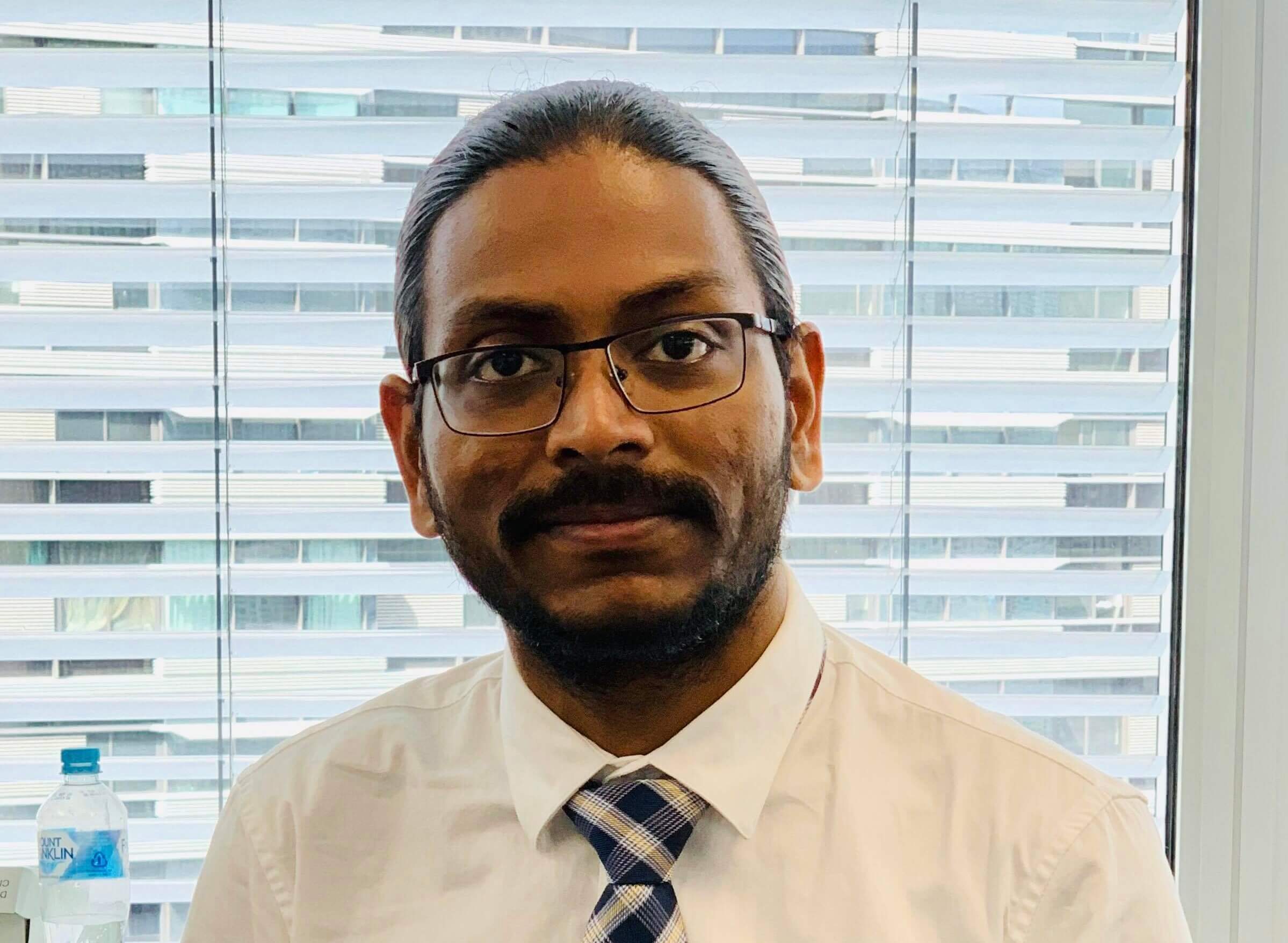
I ended our talk with a question my 7-year-old had specially requested I ask: Will we turn into zombies if it goes all wrong? To my relief, Avinash told me that while there was always a chance of getting things wrong in epistemological and experimental science, I could confidently report back home that we were not turning into zombies. The future is better and more advanced if we use technology sustainably and ethically.
By the end of the interview, I felt both fascinated and relieved. Fascinated because every time Avinash used the word brain, he would specially mention whether he was referring to a biological brain or a computer brain; and relieved to know that our technologically advanced, AI-assisted future may not be as dystopian as most sci-fi movies suggest. This only gets more exciting from here.
Dr. Ayesha Jehangir is a war-journalist-turned-academic, with a PhD in media discourses of war and peace. Her research focuses on digital media cultures, political economy of social media, and digital activism. She tweets @zubaan_daraz.