Four of our hottest South Asian Australian hip hop artists tell us why Aussie-grown South Asian hip hop deserves to have its moment.
“We got so much to offer and I feel like now it's finally our time,” says Saie, a DJ, producer and artist in the Brisbane-based Chor Bazaar collective, who performed at last year’s SXSW Sydney.
“In Australia, we're kind of overlooked cause it is such a new country and people forget that it's even a thing.”
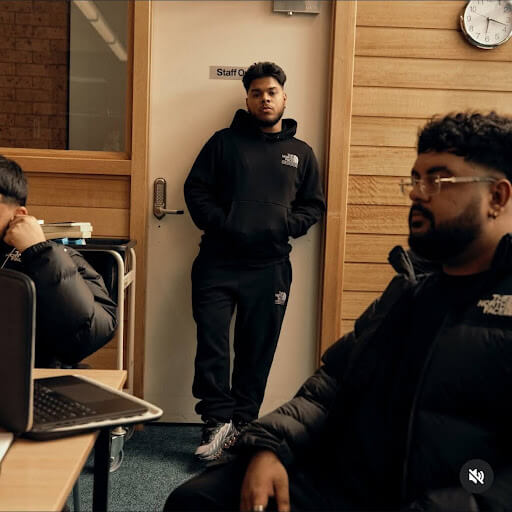
Source: @saiegram. DJ Saie photographed for a Chor Bazaar collab with JD Sports x The North Face earlier this year, in Sydney.
Meet the Hidden Gems Transforming Aussie Hip-Hop
Saie is just one of the many talents catapulting the Australian name worldwide in a vibrant but criminally underrated space - South Asian Australian hip-hop.
In this exclusive interview, we hear from a panel of trailblazers in this scene who share their top tips for any independent artists trying to make it big from the land down under.

Meet the Panel: Riya (yours truly) and the hip hop prodigies; DJ Saie, Aayushi Shah, Matthew Craig and Meghna Mitra. (left to right).
While each has their own artistic expression, it is the one thing that they all have in common - their ‘South Asian Australian-ness’ - that gives them an edge.
Defining South Asian Australian-ness
Aayushi Shah, a hip-hop dancer, choreographer and now co-director of multiple crews says, “A lot of the work that we do…comes from a lot of the South Asian roots that we have and then our experience with it, because a lot of us, being younger, have grown up in Australia.”
She reflects on the second-gen South Asian Australian identity that we know too well.
“We speak English more than we speak our own language sometimes."
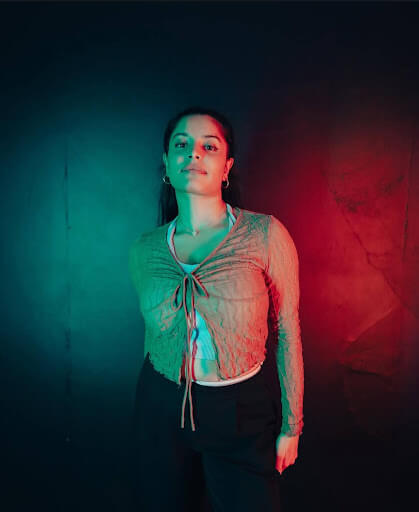
Source: @intention.studios. Proud Gujju Aayushi Shah loves to get her South on, photographed by @karmatography for an Intention Studios duo number with @nehaponnala to Pushpa 2’s hit; ‘Kissik’.
“So, it's not that we don't understand it and it's not that we're not connected to it, but there's this weird place where it's like you go overseas and then you feel like an immigrant in your own country and then you're in Australia, but then you're so close to your culture.
“That weird bridge only can be understood by your art completely ‘cause that balance is maintained there,” says Shah.
She channels this feeling of living between two cultures into fusion dance work with the hip-hop collectives; Intention and Bindi Bosses, known for remixing folk traditions with the beat of the street.
Multitasking the South Asian Way: From Chaos to Cause
In true South Asian fashion, this balancing act moves beyond the two cultures to juggling countless responsibilities on their plate.
Owner of Australia’s first 24-hour music studio, Marshall Street Studios and the nation’s hip-hop “artist discovery platform”; AUD'$, Matthew Craig calls himself a manager, publicist, artist developer and youth worker. The genre-blending “alternative hiphop/electro-pop” musician and songwriter, Meghna Mitra is completing a law degree alongside humanitarian work.
These expert multitaskers channel their inspiring work into their hip-hop, bringing the genre back to its original purpose - a form of protest.
“I'm currently working in refugee and immigration law. So, a lot of the songs I write are about human rights issues and social justice,” says Mitra.
Likewise, Shah says; “We use our platforms to also talk about human rights and different things that are happening around the world.”
Even if hip-hop’s empowerment potential is recognised, Australia is not usually a part of this story.
“You know about so many political issues that happen in America and then when that gets translated into songs it blows up but with Australian culture it's not voiced as much,” ]says Shah.
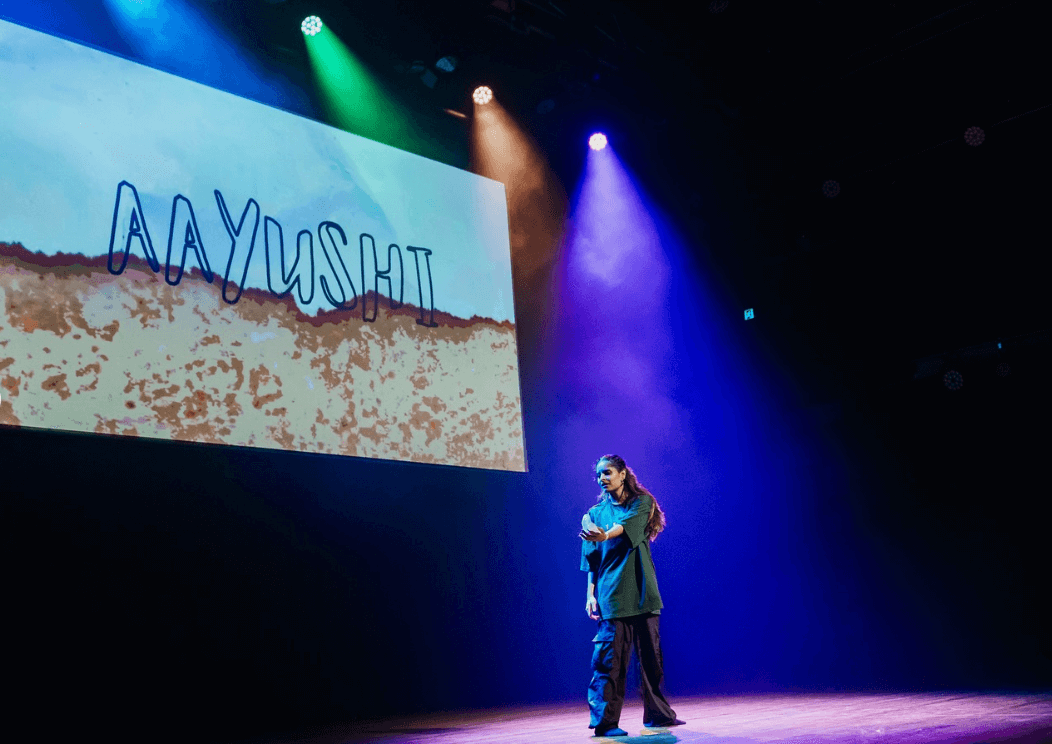
Source: @fromyush. Dancer Aayushi Shah performing at an Intention Studios showcase, photographed by @aesthete.captures.
Craig blames it on the newness of Australia’s hip-hop scene, not a lack of interest.
“I, in a lot of my conversations, liken the 2020s in Australia to the 1990s in hip-hop culture in the US. I think we're still at a very foundational stage in this country. We're 30 years behind what goes in the US often in pop culture.”
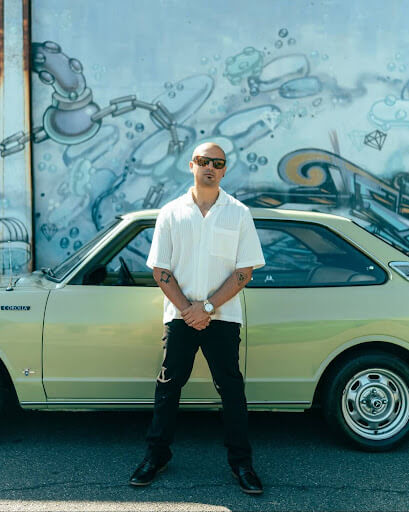
Source: @whatmsees_rmf. Matthew Craig photographed by @bychrishails for his single ‘Do Different’ released earlier this year, featuring @sir_goobsy and @brzlmbtz.
“There's a lack of pathways and the infrastructure that exists in other parts of the world that have adopted hip-hop as a part of mainstream culture prior to what Australia has done,” he says.
Home is Where the Heart and Hype Is
While a lot can be said about the downsides of Australia, when it comes to global recognition, one panel member had a ‘glass half-full’ outlook on living here.
“As much removed as we are from the US and the UK, one benefit I guess we do have being in Australia is being so close to the motherland, being so close to Asia, being so close to India,” says Saie.
“I feel like it kind of can get overlooked sometimes when we think about numbers and all this kind of thing, but they really are stronger in Asia.”
He even goes as far as to say, “The numbers that they have is uncomparable to us, even to the US.”
And that comes from personal experience, as Saie just got off the back of a North American tour, where he was amazed by how unified the experiences of the diasporic community were.
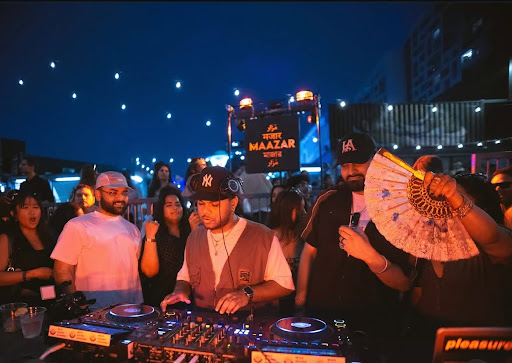
Source: @maazar.to. Saie’s set during September’s Maazar Festival in Toronto, photographed by @dhruvvsabherwal.
“It was really cool actually going over there and seeing a whole different country but everyone, in a way, is kind of the same.
“We all grew up listening to our parents' music, listening to Bollywood music, listening to classical music, whatever it was. But then, in your car ride, you'll listen to your Drake or your Nav or whatever you want to listen to.”
Social Media: Connector or Crutch?
The DJ played this unity across waters up to the power of social media.
“I think that is another thing that's really cool that nowadays it's way easier to do that. Even for us to have this meeting right now. We're all probably in different cities, but we're all talking.”
Beyond just connecting the community across continents, the artists reflected on their reliance on social media to get their big break in the first place.
Saie says, “social media, at the end of the day, is the main thing in the music industry. As sad as it is to say, you can make the best songs in the world, but if you don't put them anywhere, no one's going to know.”
Mitra agreed saying, “It is getting a lot easier with the power of social media and we're seeing more and more Australian artists on the rise now internationally.”
Networking, But Not the LinkedIn Kind
Social media is not a one-size-fits-all solution in this business, stressed the artists, who gave some more practical advice to aspiring independents trying to make it big.
“It's all networking right? So the more you can network with more people, the better it is,” says Saie.
Since we hear this term being thrown around as a buzzword quite a bit in today’s economy, Shah clarified it’s not “networking” in the way that first comes to mind.
“There's no such thing as ‘this is Indeed. You can go on it and then apply’”.
She gave a step-by-step guide to her take on “networking”.
“Don't wait till you're at the show performing. Just go and attend a show and watch, yourself.”
“You meet people closer to the place you want to be at and then you see the teachers there, you see what kind of things they produce at the show and then eventually you can get in contact with them that way,” she said.
“If you show your face at this event, just your face, I think that's already closer, there's a face to the email that I have sent.”
Craig couldn’t agree more.
“Hip-hop is based on community of course, so participate in and be part of community,” he says.
“That's a two-way thing as well; it's about what you're giving as well as what you're getting.”
The Fine Line Between ‘Us’ and ‘I’
Another common piece of advice was around collectives, seeing as all panel members were in some way affiliated - either in one or owning one.
“You're working with known people that maybe other independent artists know of, so while that is not completely your mission or that is not your purpose, there's a bit of reliability with the work you produce and the people you're connected to,” says Shah.
While Mitra agreed, she reflected on the challenges balancing missions.
“Staying true to yourself is definitely difficult especially when you've got lots of people around you giving you lots of different suggestions and ideas and you’re not sure which ones you want to take on.”
She gave her tips on how she maintains a personal brand, saying, “It's really about filtering what kind of media I consume and who I'm inspired by and really staying true to those influences.
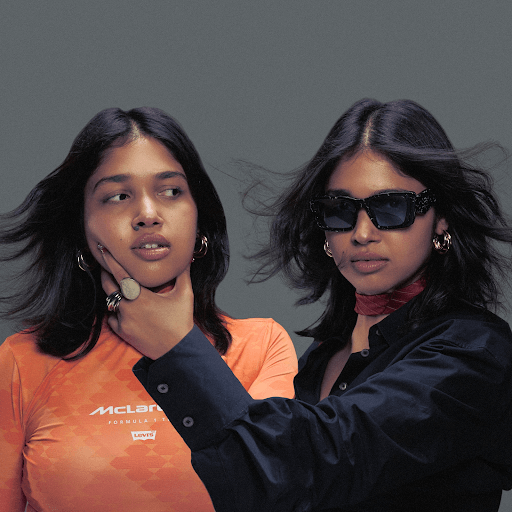
Source: Meghna Music. Artist Meghna’s latest album, ‘A WORLD FULL OF IDIOTS’, released just last month. Photographed by @bbds_.
“It comes with time and it becomes more clear as you keep releasing stuff and you keep meeting new people and keep creating I guess.”
Craig agrees, finding that branding is more important than anything else.
“I encourage artists emerging less and less to worry about the means and worry about the ends. The means are the radio plays and the playlists and the shows and the festivals or whatever. Don't get caught up on those things,” he says.
“Building an audience and a brand and a narrative and a catalog is the most important thing and you can do that with or without industry support.
“I like to say ‘treat industry support as the cherry on top. You’ve got to make the cake yourself’.”
Source: @whatmsees_rmf. Craig’s latest single ‘tomorrow’ released last Wednesday.
Artists Pages - Add Aussie South Asian Hip Hop To Your 'Gram
@fromyush
@intention.studios
@renovate.collective
@bindibosses
@whatmsees_rmf
@audollars
@marshallstreet.studios
Riya Rao is SAARI’s latest Newsletter Editor who has her sights set on the world - literally. Based in Sydney (though rarely found there), the International Studies and Media student draws on global study, travel and humanitarian work experience to give a voice to the unheard of the diaspora.