The world of social media is perhaps one of the only industries in the world where ‘go big or go home’ is more than just a motivational mantra. With most other businesses, it is possible to enjoy mediocre success – but if you’re building something that relies heavily on community, your choices are limited to abject failure or overwhelming eminence.
AirChat, Silicon Valley’s latest gift to us, is poised to make it big; and I decided to try it out for a few weeks. For the uninitiated, AirChat is the latest in a series of social media applications that have tried to personalise the digital world by promoting an asynchronous, voice-based method of communication.

Image Credits: TechCrunch
Spoiler alert: It’s not the panacea to loneliness and connection that it’s trying to position itself to be.
While the world has been quick to brand it as the love child between Twitter and Clubhouse: essentially a platform that allows you to send voice messages and interact with users from across the globe, I’m not quite sure I agree. I’m not big on metaphors, but if I had to use one to describe AirChat, I’d probably compare it to a rich family’s show pony who performs the same tricks as others, albeit with a lot more panache.
Don’t get me wrong – I see the appeal. I just think it’s short lived.
Co-founders Naval Ravikant and Brian Norgard have shared their vision to try and capitalise on the features that people liked about Clubhouse: rubbing shoulders with big names, communication through voice rather than text, and the ability to meet new people in a low-pressure environment. And then taking it one step further by making it asynchronous and permanent, in stark contrast to the live content Clubhouse promoted, to make it more accessible.
And that is going to draw people in – some like me will burst through the doors with a morbid sense of curiosity about the promise of feeling a sense of community, while less sceptical users may just want a taste of the ‘next’ big thing before it becomes the ‘last’ big thing.
The question that’s been playing on my mind for the last few weeks is whether it will be enough to make people stay? I’ve found that if I want to use AirChat’s voice to chat feature properly, I must be a lot more intentional in how I consume content on it. This often means I can’t turn to it when I have a few minutes between chores or scroll through the app when I forget my headphones while commuting.

And therein lies the problem – AirChat fails to consider two big dimensions to social media usage: the first one being that scrolling on social media is far less intentional than they accounted for. Research on disassociation while watching content in 2022 confirmed that most people have experienced mindlessly scrolling on social media. This is backed by the growing usage of the term doom scrolling, an unfortunately widespread phenomenon where participants reported excessive consumption of content without an active realisation of how much time had passed.
In simpler terms, this means not all of us use social media attentively. Infact, I would go as far as to say that many even turn to it when they want to switch off their brains and unwind. Or at the very least, multitask while streaming a show or movie, or getting stuff done around the house.
Is that sort of behaviour healthy for us in the long-term? Perhaps not, but that’s an article for another day. The fact is that AirChat is competing for undivided attention in an economy where focus is in shorter supply than even time.
One could argue that AirChat then, is not a substitute for social media itself, but perhaps a new age podcasting revolution. There are people who do enjoy that, and I can see AirChat being able to carve a niche for itself there. However, most people still think of listening to podcasts as an intentional activity, meaning that AirChat will have to step up its game to get people to choose it.
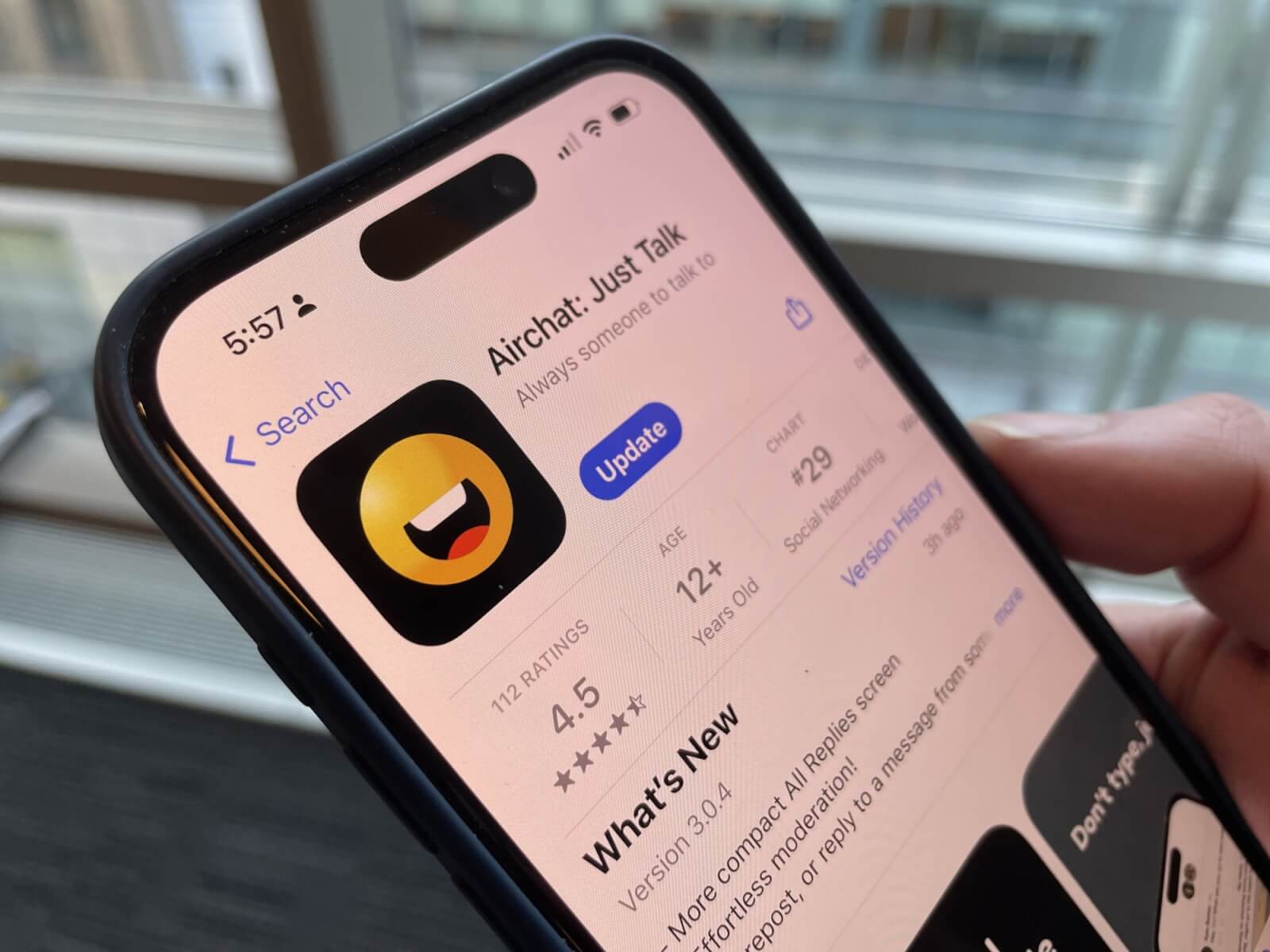
Image Credits: Bloomberg
The second, and arguably more problematic aspect to its operations is the lack of desire to monetise it. When you first think about it, it sounds like a stroke of genius: after all, aren’t we always complaining about Zucc stealing our data online? And look, it’s not a bad idea. No pop-ups mean users are likely to feel positive about the time they spent on the app.
Which sounds like a win too. So, what is the problem then?
The problem is that good content follows money, not the other way around. If companies don’t think of AirChat as an attractive avenue to market their products, influencers aren’t going to migrate to the platform because they will not have an appropriate return on their time investment in getting familiar with a new application and setting up an account from scratch.
When there’s no money on offer, the motivation becomes keeping up with the Joneses – this is the draw of Twitter and TikTok. And if I’m not going to be able to get a feel of trends or stay abreast of the hot new restaurant in town, I don’t know that I would want to spend much time on AirChat.
Don’t get me wrong, I do think there are many advantages to a platform like this – as others have pointed out, being asynchronous is perhaps its biggest strength, and the company has reported that most of its users identified as being introverted and were drawn to the app because it let them use a voice interaction feature in a way that felt safe to them.
The algorithm was not half bad for an app in its nascent stages, and the UX felt intuitive too. I liked feeling like I was a part of an exclusive group, though I’m not sure how long they will be able to retain that.
Ultimately though, I just felt like I wasn’t seeing the kind of content that interests me – perhaps because most memes are funnier when you read them, not listen to them. And this might be a function of a limited user base, but I was overwhelmed by all the posts around start-ups and hustle culture. One would have thought that having the time to both listen to and read their posts before going live would make people reconsider promoting unrealistic lifestyles, but that hasn’t been the case in my experience.
I also would just love to go back to my days of listening to music while scrolling on Reddit on my way to work, thank you very much. But hey – I’m just another Gen Z kid who’s known for her lack of focus, so don’t take my word for it. Maybe you’ll have better luck resisting your impulse to do a hundred things at a time.
Pooja Agrawal is a GenZ living in Sydney Australia. She likes exploring new places and meeting new people. Pooja enjoys Mexican food, long walks in the city and fast WIFI.