A new partnership between two social enterprises in Australia and India backed by both national governments is set to bring entrepreneurial education to Indigenous young people in Meghalaya in northeast India.
Yesterday, Young Change Agents, an Australian social enterprise that has engaged more than 135,000 young people in entrepreneurship skills building over the past eight years, and Avenues Meghalaya, a 20-year-old social enterprise based in northeast India that has provided life skills and opportunities to over 120,000 Indigenous youth, signed a memorandum of understanding to work together to pilot a co-designed program for young people in Meghalaya.
This MOU is the first bilateral agreement signed between India and Australia focusing on Indigenous youth and social entrepreneurship education. As part of the partnership, the two organisations will work towards education and cultural change, new community development programs, and building the first global community of practice for Indigenous youth entrepreneurial education.
This initiative is backed by the Australia-India Business Council, the Australia India Youth Dialogue and the governments of India and Australia.
Meghalaya’s waterfall of talented Indigenous youth
Meghalaya in northeast India is home to lush green hills and a regional town called Cherrapunji, one of the wettest places on earth, with the heaviest rainfall in the world that can last between 15 and 20 days during the monsoon season. The state of Meghalaya only recently celebrated its 50th anniversary of statehood.
For 20 years, Avenues Meghalaya charismatic CEO Mark Laitflang Stone, who hails from Meghalaya’s capital city Shillong, has been working with young people to help unlock their potential and increase their visibility.
“This partnership is a real conduit for international exposure, growth and advancement for youth in Meghalaya, leading to confidence, real job creation and a change of perspective for young people in need,” he says.
“At its core, Avenues is focused on helping young people find a sense of self worth. We do this through focusing on what are often called ‘soft skills:’ wellbeing, resilience, communication skills, and aspiration. This includes not just the ability to communicate in English but also improve their social skills with their own language.”
“In our partnership with Young Change Agents we have a big opportunity to teach our young people about entrepreneurship, a mindset of seeing problems as opportunities and helping to solve them. Our success will be measured in the nascent talents we spot in young people today.”
Stone believes this new cross-continental partnership is an important milestone for India’s Indigenous youth, and a confirmation that the prospects of India’s northeast region are on the rise.
“‘It’s a historic moment in the northeast Indian region’s youth development narrative. This initiative marks the first knowledge-exchange intervention for entrepreneurship education for Indigenous youth between our nations.”
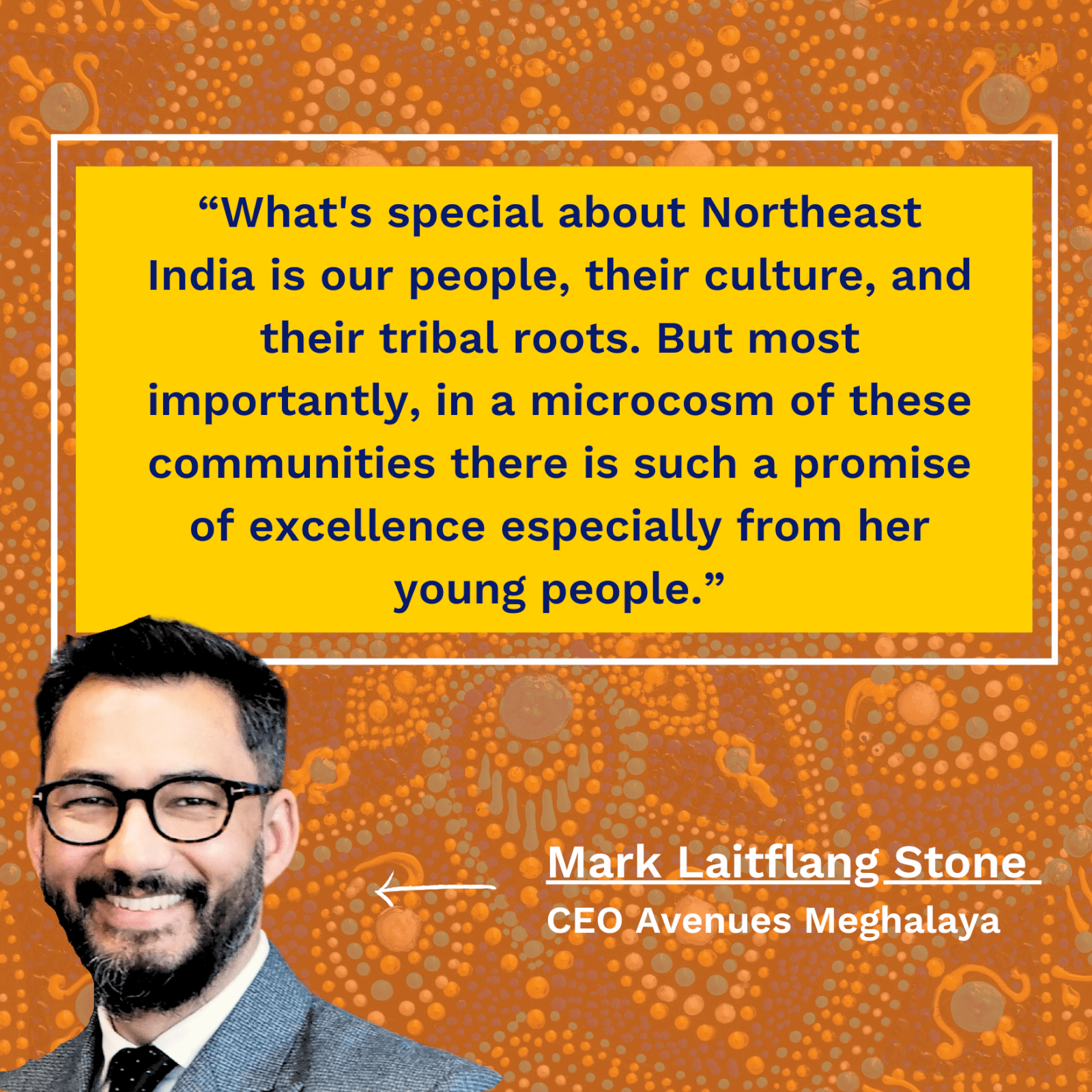
“What's special about northeast India is our people, their culture, and their tribal roots. But most importantly, in a microcosm of these communities there is such a promise of excellence especially from her young people.”
“We're also a cultural capital of music. A lot of the good western music that's produced in India, and a lot of good literature, is coming out from Shillong.”
Northeast India has become an area of focus for the Indian government, with Indian Prime Minister Narendra Modi promising that the rapid development of the north east region of the country will mirror the development of SouthEast Asia.
Mark Laitflang Stone has seen this growing focus firsthand.
“It's only in recent years that the northeast of India has become the new frontier of economic growth and prosperity. The government of India is keenly focused on the region because of its strategic importance with shared international borders with many countries including Bangladesh, Bhutan and Myanmar.”
“The economy in the hills of Meghalaya and Shillong is driven by agriculture, by hospitality, tourism, and for many years mining. But now there is a burgeoning generation of young entrepreneurs.”
“Our programmes are now working towards strengthening education frameworks in north east India, augmenting traditional school education with soft skills, well being practices, talent identification and STEM based awareness for critical thinking. These interventions help adolescent youth develop self-worth and aspiration early on in life. The training received has long term benefits - coping with emotions in the workplace, negotiating their points of view with a larger audience, receiving your first feedback from a manager and choosing to persist despite the odds.”
“Our past interventions have led to improving employability in the hospitality sector as well. The life skills have led our graduates to beat the national average for hospitality retention in India.”
Stone reflects that these life skills, when combined with entrepreneurship skills, are a way to unlock the potential of young people, especially young women.
“Our part of the world is very interesting. We have matrilineal communities where children take the last name of their mother’s tribe.”
“In terms of agency, and in terms of life skills, our girls have had to come a very long way to be treated equally and to be seen equally. At this stage in our own economic development, especially in our part of the world, it has become increasingly important for young girls to have access to programmes that help them believe in themselves. And in our programs, it’s always the girls more than the boys who take the programs more seriously.”
As a life-long entrepreneur, Stone is passionate about the lessons business can teach, and is visibly emotional as he signs the memorandum of understanding with Young Change Agents.
“This partnership is what we call a long shot. I would have never seen this moment in my life, after two decades of sacrifice and hard work. I have seen that it is not equal access to equal opportunities, but I have seen how you can change narratives and create new stories. I look forward to taking this co-curriculum we will build and sparking a new generation of young people in our part of the world”
The partnership came about through a chance encounter at last year’s World Entrepreneurship Congress in Melbourne. Stone spoke to an inspiring young person, and when he inquired where the young person learned their impressive speaking skills, Stone was introduced to Young Change Agents, and to Co-founder Margaret O’Brien and General Manager Aruna Venkatachalam, who wore a badge stating “Voice. Treaty. Truth.”
Their conversation uncovered a shared set of values and mission to empower young people, and after three months of discussions the two organisations decided to collaborate together and bring a world-first knowledge exchange to young people in both countries.
While he is in Australia on this visit, Stone plans to visit some local tourism spots near the coast with his family. But he also dreams of going to see the stars in the Australian Outback.
“I love stargazing. It's a childhood love for me. And I've always thought that at some point in my life I will find myself in the middle of an Australian Outback setting, looking at the Milky Way. So if anyone can help me do that, I'm your guest.”
Indigenous youth: commonalities between Australia and India
“We believe in cultivating an entrepreneurial mindset, one that teaches young people flexibility, critical thinking and effective leadership,” says Young Change Agents CEO Margaret O’Brien.
“We are excited to have been invited to partner with Avenues Meghalaya and exchange knowledge with teachers and communities.”
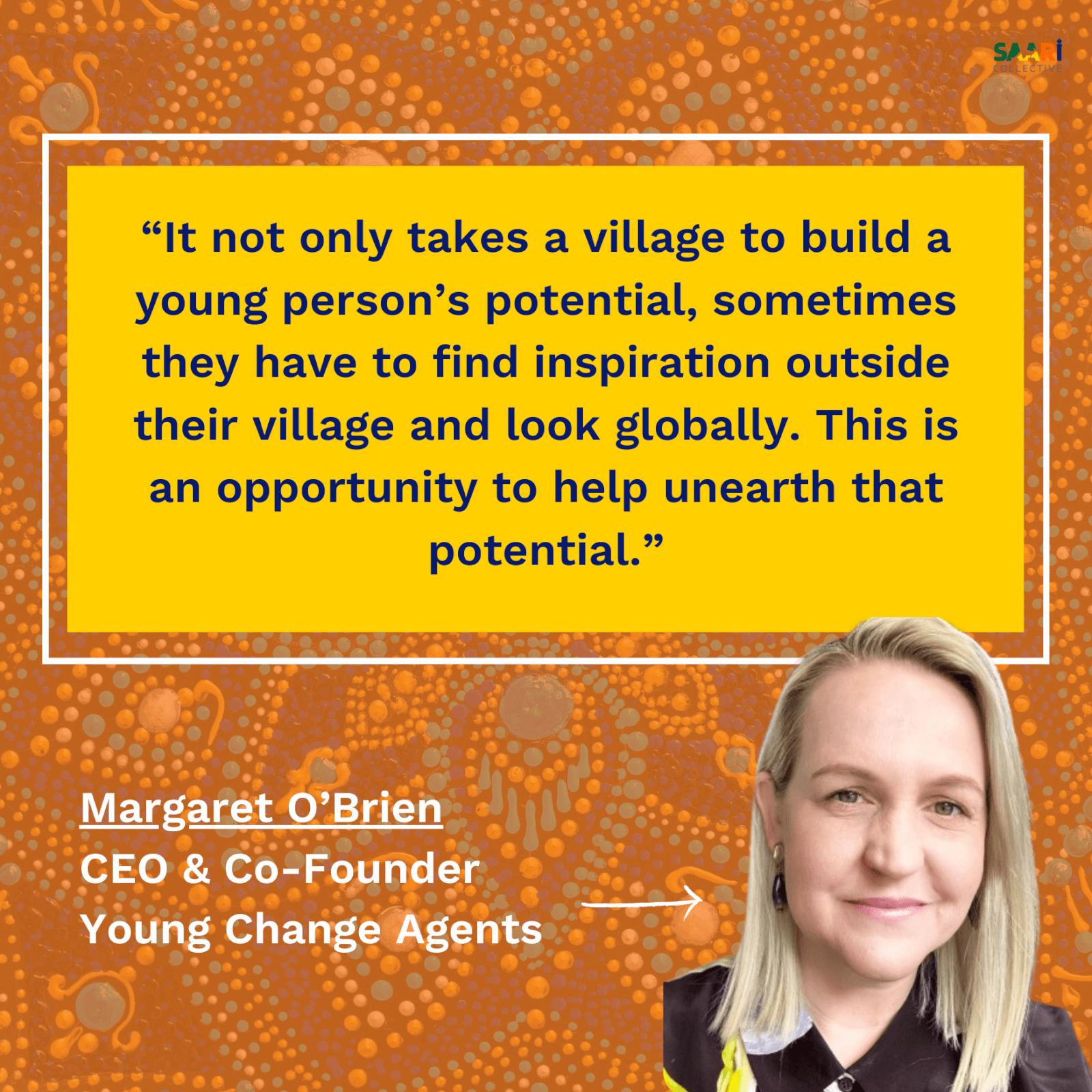
“The amplifier effect is powerful. It not only takes a village to build a young person’s potential, sometimes they have to find inspiration outside their village and look globally. This is an opportunity to help unearth that potential.”
This partnership came about through the leadership of South Asian Australian Aruna Venkatachalam, the General Manager of Partnerships and International at Young Change Agents. She has deep experience engaging with First Nations young people in Australia.
“Three years of deep codesign alongside Australian First Nations youth shows some cultural similarities with First Nations youth in Meghalaya” Venkatachalam says.
“First Nations youth are seeking culturally-proud, hands-on education that is shaped with them and delivered by their communities to spark their entrepreneurial thinking.”
“We know that creating a safe space where young people feel supported to take risks is so important.”
“It's about self expression, voice and being able to find your voice through entrepreneurship. Expressing your values and who you are as a person, that unique, special person that you are,” Venkatachalam notes.
“The spirit of entrepreneurial thinking is imagining something can be different,” says South Asian Australian entrepreneur and Young Change Agents Board member Parth Gulati, who signed the MOU on behalf of the organisation.
As the partnership agreement was signed, Kamilaroi woman and Young Change Agents Indigenous Engagement Lead Tiffani Seaton led an assembled group of entrepreneurs, social entrepreneurship advocates, government officials, education sector leaders and India-Australia relationship builders through an important discussion about the ways this new co-designed program could impact Indigenous young people.
She began by highlighting the importance of equitable access to entrepreneurship education and that there are different challenges faced by First Nations young people on Country, in regional or rural areas, as well as those who live in urban areas.
“One of the biggest challenges is how might we ensure that all First Nations young people have access to these opportunities?” Seaton asked.
“What can we do to ensure that those young people that are living on Country that have very different experiences, but have very connected feelings of intergenerational trauma, are included as well? How can we ensure that we provide the resources and the right people to be creating these opportunities for those young people whilst also having the same opportunities for those that are in these metro areas?”
“One of the great benefits of this partnership program for those First Nations individuals living in metro cities that may not be connected to their culture have the opportunity to reconnect with culture and go a little bit deeper,” Seaton advocates.
Seaton is reflective and open, drawing on both her professional and lived experiences. “The outcomes don't always have to be the same for each person. It can be connection to culture, it can be empowerment, it can be lighting the spark of change and being the point of difference,” she says
“I think that's one of the best things about working in First Nations communities - you'll find that a lot of the social enterprises, in their ideas, these young people don't even realise they're giving back to community when they create products.”
“They're keeping traditions alive, they're keeping culture alive, and then inviting the rest of the country or the rest of the world to really indulge in that culture to understand that culture and that richness.”
The roundtable discussion emphasised the importance of creating a safe space, reframing failure as a way to learn, and of ensuring impact is sustainable and equitable.
Seaton doubled down on the idea of helping young people build their own resilience and agency so they retain those skills and experiences for life.
“In terms of sustainability, it is about bringing it down to the business model and creating that safe space for young people to fail early. Not every idea is going to be perfect from the get go. I think we need to let young people know that there are going to be some bumps along the way. You are going to get knocked back. But you need to be able to pick yourself back up and learn from that. And then go for it.”
“Our job is to ensure that we create the right environment for that to be happening. It’s very important to make sure the right mentors are there beside them to light that path and be there to help so the young people feel empowered to pick their pieces back up. Not to have us pick them up for the young people, but to be there with them on that journey.”
Strengthening bilateral ties between India and Australia
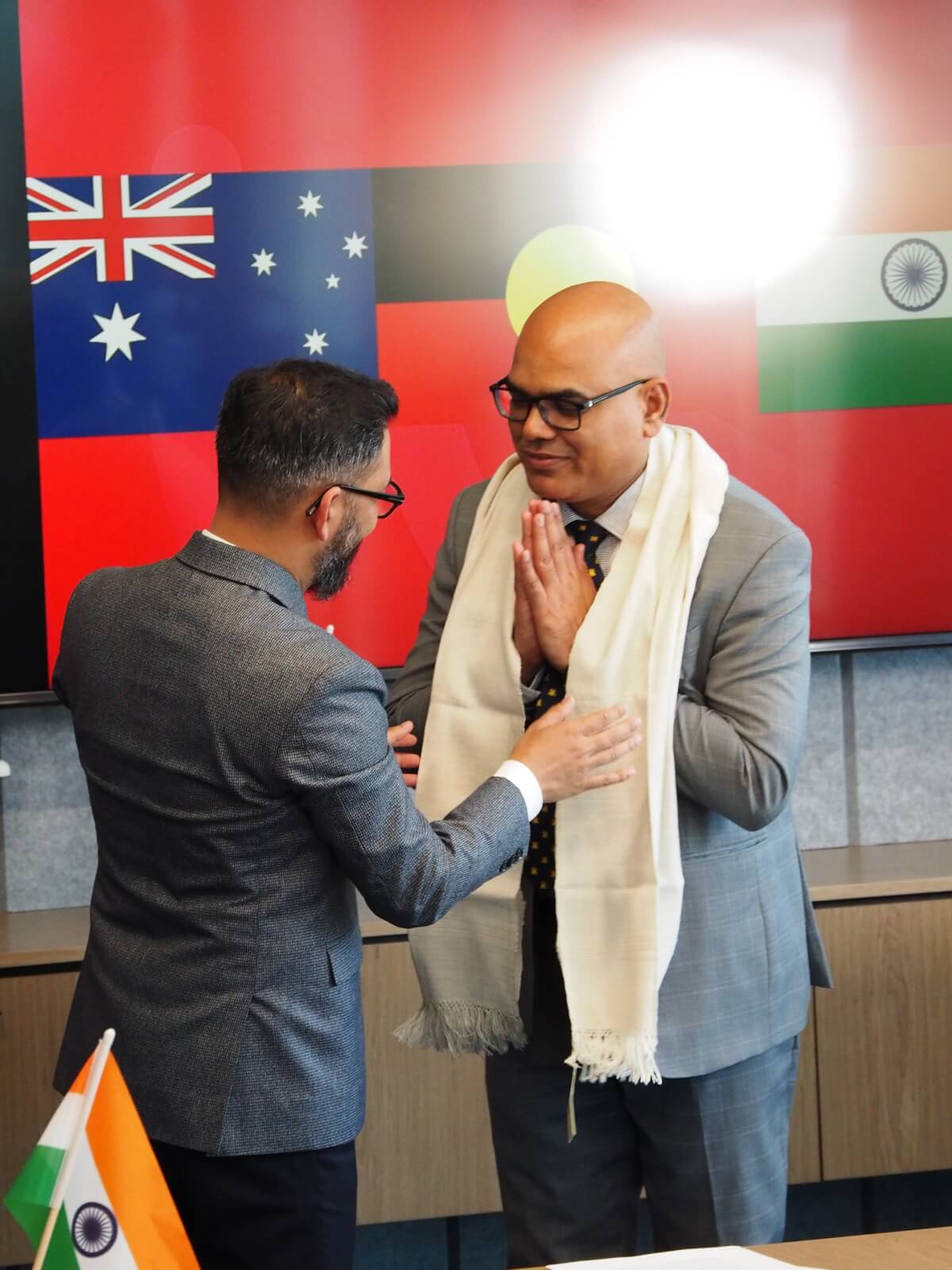
Dr Sushil Kumar, the Victorian Consul General of India, helped launch the partnership between Young Change Agents and Avenues Meghalaya, highlighting the opportunities that can be realised through working with Indigneous young people in the Meghalaya region.
“Northeast India endowed with natural beauty and rich cultural heritage has much to offer to the nation and to the world. It is high time we work together for empowering the youth with education and tools they need to become successful,” Dr Kumar stated.
He referenced the Gandhian idea of education as one that integrates learning with hands-on skills and real-world application, and highlighted that entrepreneurship learning brought about by teaching young people the process of creating, managing and scaling businesses is a living example of these principles in practice.
“Gandhiji’s vision encourages educational systems that foster creativity, innovation and practical skills, preparing students to solve real world problems, sustainably and ethically. It is about inspiring the youth to dream big, and equipping them with the capability to turn their dreams into reality.”
The Consul General also reinforced the strong bilateral relationship between India and Australia’s education sectors.
“Education is a strong pillar in India's comprehensive strategic partnership with Australia, and the relationship extends to skill development and entrepreneurship. The collaboration in these areas is not just any fiscal, but essential for fostering innovation, enhancing economic growth and addressing the challenges of the 21st century,” said Dr Kumar.
“I look forward to the future created by these new young entrepreneurs.”
Sandeep Varma is the Founder of SAARI Collective. SAARI is a proud media partner for this initiative.