The recent study on the gender wage gap in the Australian workforce has caused a stir, causing many women to think about their own positions in the workplace, and whether years of advocacy and International Women’s Days have got us to where we want to be.
Excluded from this conversation is the intersection between gender, culture and identity. What does the workplace look for women of colour? How do we compare to our white and non-white male counterparts?
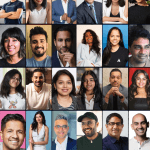
We spoke to 10 South Asian Australian women across the country on what inclusion means to them.
Intersectionality
Good investment in women means education of emotional intelligence in leadership, and unlearning patriarchal practices and biases that hold women back. Overt and covert racism, microaggressions and sexism at the workplace is an unfortunately common problem that needs to be addressed. Also, don't place all South Asian women in a single bucket – we all have beautiful individual identities and intersectionalities that make us truly unique. – Ruhee Meghani, Founder of Allied Collective
There's a common saying that 'talent is equally distributed, but opportunity is not'. For many South Asian women, even if they are highly educated, capable and hard-working, work opportunities may be less accessible because of cultural and societal expectations of women, and/or other people's unconscious or conscious biases around women and those from a different ethnic background. Inclusion in the workplace is about providing equitable access to opportunity by creating an environment that is accepting of diversity and understanding of individual circumstance. This will not only attract but also retain the most talented individuals. – Sonia Shah, expert in cardiovascular disease and genomics with the University of Queensland
[Inclusion is] understanding the intersectionality of gender, culture and identity and then addressing that understanding in the workplace so that we can work towards a truly diverse and inclusive and equitable workplace where there is no discrimination, there's equality of pay and in respect. The inherent culture of the place [should] enable you to feel safe. You are treated the same way as everyone else, not just in financial or policy issues, but also intrinsically, in other things that don't normally get spoken about – in terms of having a work life balance, in terms of breaking through cultural stereotypes, and also in terms of acknowledging that your life and what you do may be different. – Raji Aiyer, Founder and COO of Appearition
It’s [about] not just acknowledging but really valuing diverse perspectives that women from all backgrounds can bring to the table. I think that's taken for granted. Especially South Asian women [who] come from all sorts of backgrounds, [could have] been through all kinds of things growing up within our families. Wherever we're coming from, I think we can bring some really diverse experiences with us. – Yesha Patel, founder of after
Bringing yourself to work
I have a friend who works at [a multinational goods company], and her boss is also a South Asian woman. [Her boss] often wears kurtis and stuff to work, and my friend felt comfortable trying that [too]. But most of my workplace is… European, or essentially white, for lack of a better word. I've never felt like I could wear that sort of attire to my office. That's a really basic example, but I suppose inclusion means that sense of comfort that I can bring my whole self to work. – Pooja Agarwal, Consultant at Levant Consulting
Inclusion to me is the fact that my voice is respected and celebrated in my workplace environment, and that I'm able to bring my whole self to work. [In that] I don't have to leave the South Asian version of myself at home. I guess for me, what that looks like in my day to day life is, [getting] to tell my coworkers about a South Asian band that I saw on the weekend, or a movie that I watched, or bringing Diwali sweets for them. – Harshdeep Kaur, Content and Community Lead at Flux Finance
If we assume that in the settler colony that all institutions were designed without South Asians in mind, without Indigenous people in mind, how can this be a safe place for me? How can I bring my gulab jamun to afternoon tea and not have people saying, 'Oh, that's so exotic!' Or how can I bring my fish curry rice and people say, 'Oh, that's so smelly.' How can I be present and engaged in the workplace in a way that honours my dignity and what I have to offer? That's what I'm interested in. – Ruth De Souza, nurse and researcher focused on the intersection between reproductive health and race, lecturer at RMIT University
Beyond ticking boxes
My personal experience is that of colleagues that I've known. There have been too many incidents where people feel that they've been hired or recruited to tick a diversity box. There is a feeling that we’re sort of somehow constrained in our ability to grow within an organisation because our value has been fulfilled simply on the basis of filling a diversity charter, which is both insulting and extremely frustrating in terms of career growth. – Tasneem Chopra OAM, DE&I leadership consultant
Organisations should create opportunities for women. Look at the organisation’s pay scale – and this should not be just gender-based. Who is getting promoted? Who's getting tapped on the shoulders to go for those promotions, and who's not? Because I've seen this conversation during IWD [for] many years, and okay, initially it was getting women to the table, but the point isn't about that. The point is that at the end of their career, how well off are they compared to their male counterparts? – Onisha Patel, researcher and medical business consultant
Investing in inclusion of South Asian women, and all women in the workplace, really benefits society as a whole and not just that individual. I think it can help businesses drive innovation just by leveraging their perspectives. It's good for society. – Yesha Patel, founder of after
What are we being included into? Just because you're present doesn't mean you have any power. Just because you're there doesn't mean you have a voice. – Ruth DeSouza, nurse and researcher focused on the intersection between reproductive health and race, lecturer at RMIT University
Better, more culturally competent leadership
[We need] cultural competency in leadership. Not just to focus on hiring diversity for diversity's sake, but understand there is enormous acumen and skills competence within diverse recruits, and potential employees that are being overlooked because of the bias in recruitment processes. Overwhelmingly, recruitment teams, in my experience, tend to lack diversity in their makeup and that translates to the culture which they go out and recruit. – Tasneem Chopra OAM, DE&I leadership consultant
If [you’re] a minority, whether that's being the only person of colour or the only woman in a team, it's [about] having allies and sponsors who can really help you. Some of my best allies in my current workplace are actually older white men. Even if they don't fit [my] lived experience, they are welcome to my ideas and are willing to learn and to go along the journey with me. They've introduced me to other people via their networks and helped me to thrive in my own career, because as a junior person in my organisation, it's very hard starting out when you don't have those existing contacts. – Afeeya Akhand, researcher at the Australian Strategic Policy Institute
SAARI was my first experience [where I felt like I was] fully embraced for who I am as a South Asian woman, and especially as a South Asian woman who's a creative. I didn't know that this was a side of me that could be actually celebrated in the workplace until I came across SAARI. Previously, I was in a corporate background. I actually didn't know that it was okay to bring your full self to work. – Harshdeep Kaur, Content and Community Lead at Flux Finance
What is not being addressed is the intrinsic behaviour that people have. Acknowledging that you are stereotyping someone and you're generalising some things; it's okay to acknowledge that and actively work with your own mental models on trying to shift that around. It’s a very powerful change, when people start to understand and bring that change about themselves. – Raji Aiyer, Founder and COO of Appearition
Advocating for ourselves
There is a problem in this country with viewing cultural diversity as a liability, not an asset. I feel that that [it’s] on us as agents of cultural change to actually advocate for that. Because they're not going to advocate for us. They're not gonna see us unless we drive home and bring forward, very clearly, what capacities we can bring. – Tasneem Chopra OAM, DE&I leadership consultant
Even for me, as someone who's junior in my career, I think we all have a role to play in terms of workplace inclusion. Whether it's about ensuring, if there is a closed door opportunity or workplace, that other women or people of colour are also invited, or providing mentorship to other junior people. It's not necessarily just looking towards leadership to make that change. – Afeeya Akhand, researcher at the Australian Strategic Policy Institute
It’s about what kind of commitment we have to our politics. What are our politics? As a community in Australia that is neither Indigenous nor from a white settler background, but still implicated in the oppression of Indigenous people, I'm interested in where that leaves us and what we are doing to not only find a place for ourselves, but ensure that there's a place for other people, for those of us who are also marginalised. – Ruth DeSouza, nurse and researcher focused on the intersection between reproductive health and race, lecturer at RMIT University
Is inclusion the answer?
I actually really hate the word inclusion. I'm feeling a bit disillusioned by institutions and organisations in our contemporary moment, where the world is facing a lot of challenges and we're demanding from institutions and workplaces that they [match] their values and their vision and mission statements with actions that really matter. So I think for me, it's more about how ethical is the organisation and how does it live its values? – Ruth DeSouza, nurse and researcher focused on the intersection between reproductive health and race, lecturer at RMIT University
Special thanks to Ruhee Meghani, Sonia Shah, Raji Aiyer, Yesha Patel, Pooja Agarwal, Harshdeep Kaur, Ruth De Souza, Tasneem Chopra, Onisha Patel, and Afeeya Akhand for taking the time to share their thoughts and experiences.