Islamic finance may be embedded in the heart of every Muslim’s connection between money and spirituality, but this perspective often gets lost in conversations today. Now you may be asking yourself: What exactly is Islamic finance? How does it differ from the regular old finance we're used to? And what does it mean to actually practice Islamic finance in this day and age? Look no further:, allow me, as a young Muslim living in Australia, to explain the practice and share my reflections with you.
What is Islamic Finance?
Islamic finance revolves around the management of finances in accordance with Shariah law (Islamic law), which is a mandatory requirement for Muslims. It focuses on ethical and equitable transactions while avoiding interest (riba) and speculation (gharar), and promotes risk-sharing, profit-sharing, and the prohibition of investments in certain sectors such as gambling and alcohol.
Islamic finance is also often valued and embraced by individuals from diverse backgrounds, including non-Muslims, and has even been renowned in some non-Muslim countries. As Justice Krishna of India said, in his support of accepting Islamic finance into India’s economic system, "Islamic finance has proven successful in poverty alleviation and promoting sustainable growth in many countries, including the United States, and it is very relevant in our country where 20 million people are starving."
On the surface, Islamic finance may look similar to conventional finance, but the core of it is quite different. Conventional finance, in my opinion, is secular and ever-changing. The construct of money depends on the socio-economic context, for instance how in our modern world the interrelationships between money, power, and ethics are usually viewed through a capitalist or socialist lens. Islamic finance, on the other hand, emphasises on individual economic freedom as long as it aligns with the greater good. It is also, contrary to popular belief, not anti-capitalist but the regulation of money in Islamic finance aims to prevent harm, curbing greed, corruption, and exploitative tendencies often observed in capitalist societies.
But the connections that exist serve different purposes. Islamic finance has only one purpose: to serve Allah and prepare for the afterlife. From my perspective, this is a reminder that any money is not truly mine but a way of serving a higher purpose. Money is only ever a means to an end - pleasing Allah. This is a law that I am automatically required to use by accepting Islam.
21st century Islamic Finance and me
My experiences practising Islamic finance in an operationally secular country like Australia have often left me uncertain. And within Islam, uniformity doesn't exist as different schools of thought differ on concepts. This often leaves me confused as despite reading the same things as others in my community, our thoughts and conclusions differ.
Over time, I've understood that following spiritual inclination resolves things for me. Operating in a modern world, I've also understood that Islamic finance requires far greater effort than following conventional finance. To become money-conscious and sensitive to the way your individual income contributes to a system, and more importantly, your soul requires effort. On a smaller scale, Islamic finance affects the way I view money that I didn't directly earn. Every little cent of interest that my bank rewards me is not mine and counts as riba so I track and separate the amount to give away. The ‘finders keepers’ principle does not apply to my life, for example when I come across loose change on the ground, I either report or donate it. When I started working, my super fund invested in consistently profitable schemes but these were all mostly in potential in impermissible industries under Islamic law. After booking a time with a consultant, I found an ‘ethical investing’ portfolio with lower returns but with spiritual soundness.
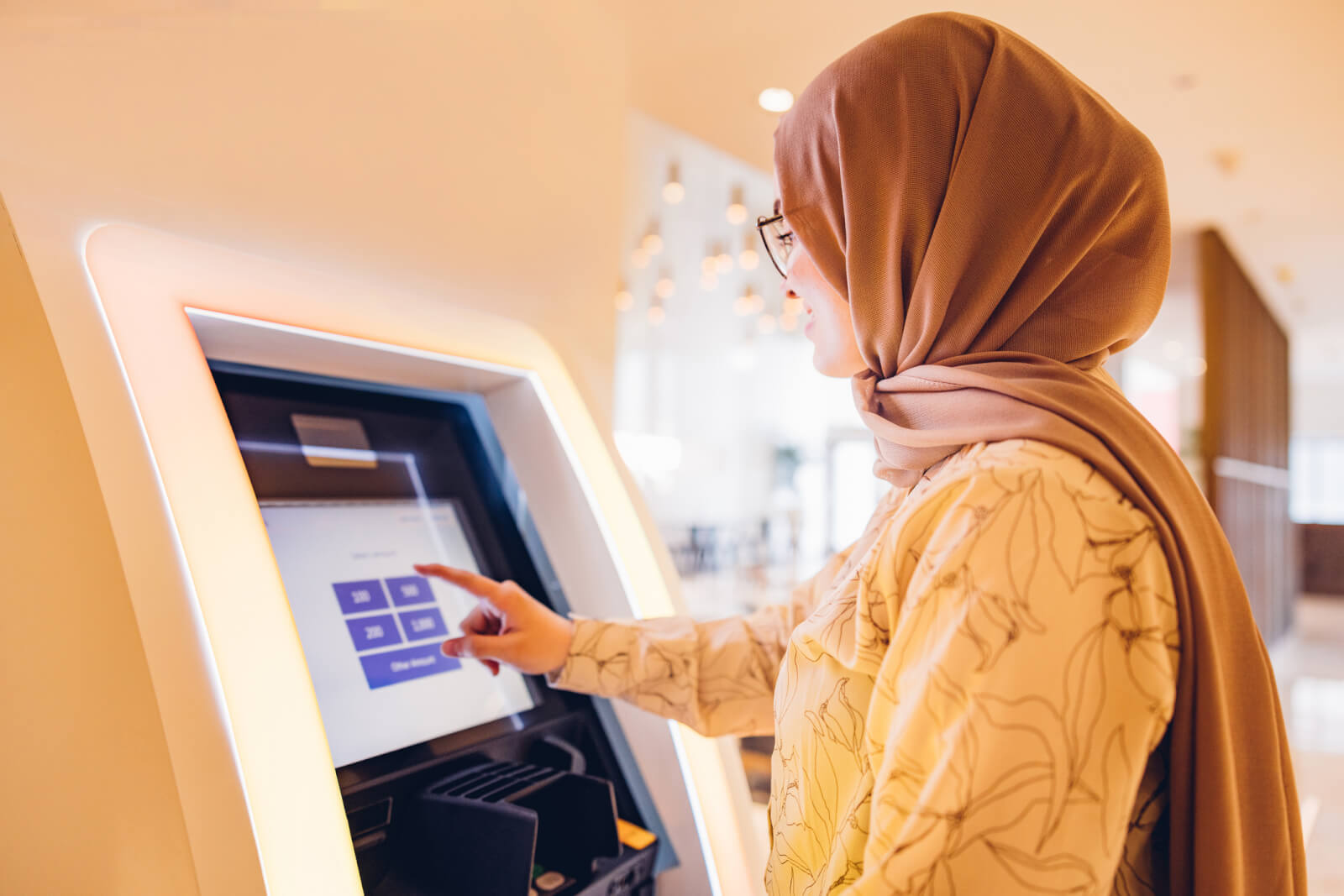
Another distinguished financial practice for me under Islamic law is following the concept of riba, both issuing and accepting interest are prohibited. I felt the implications of this the most when I was reflecting on my student loans under HECs in modern Australia. When I took out a HECs loan for my university degree, I found myself in a self-rationale that the ‘inflation’ attached to it didn’t feel like interest to me. It also did not feel exploitative because, in my opinion, it was to be repaid after I earned above an income threshold.
But as I learned more, I found that riba conceptually is any deviation from the initial amount, including inflation. I may be accepting this amount and not issuing it, yet I knew from a broader ethical perspective that I was still contributing to a similar system to the one that Islam traditionally prohibited. It just had a different name.
This led me to realise that my understanding of Islamic finance would have to become more sophisticated as I grew up to find its relevance in the modern world.
After much thought, I stood committed to paying off my student loans to address the issue of riba. I already had accumulated additional amounts due to ‘inflation,’ and I had a substantial amount due to a combination of two degrees and postgraduate qualifications. But there is an emphasis on our faith to do better consistently, so I instead saved meticulously until I could clear my debt to avoid any further effects of inflation. I paid off my debt in full in June 2022. If I were not guided by Islamic finance, this would never have been a priority - I would have left my debt to be deducted in smaller increments from my paychecks over several decades, almost passively.
From an economic standpoint, this had trajectory implications between myself and other people who were not bound by this particular perspective. At 24, I watched members of my community buy homes using mortgages (a huge accomplishment in itself from a different values standpoint). me at this same age, the accomplishment was being completely debt-free and committed to sustaining this lifetime. I understood that following Islamic law meant that success would always look different for us, but this is the difference we embrace in our devotion to Islam.
Ramisa is a Queensland-based government lawyer, aspiring academic and writer. You can connect with her via Linkedin.