“I should be able to fix this myself,” Rahul (name changed) said to me with deep frustration. He was in his first session with myself and was debating if he needed to be here or not.
It was clear to me that the debate was internal, not external. It was a debate about what men ought to be according to their society or community, in particular the South-Asian society, and what they really want to be.
My reply to him was, “Would you have the same expectation of yourself if you were recovering from a sports injury, would you say to yourself I don't need that ice pack?”
He couldn’t answer for a bit, we both sat in silence, and then he responded with “that’s different though,” to which I asked him, if it is truly that different or have we from a very young age learned to rest and recover from our physical injuries whereas when it comes to the mind, we often judge ourselves for feeling overwhelmed or being emotionally exhausted?
Most often the societal messages men receive is that whenever mental or emotional distress appears in their life they must give it their all, but silently struggle instead of seeking outside help.
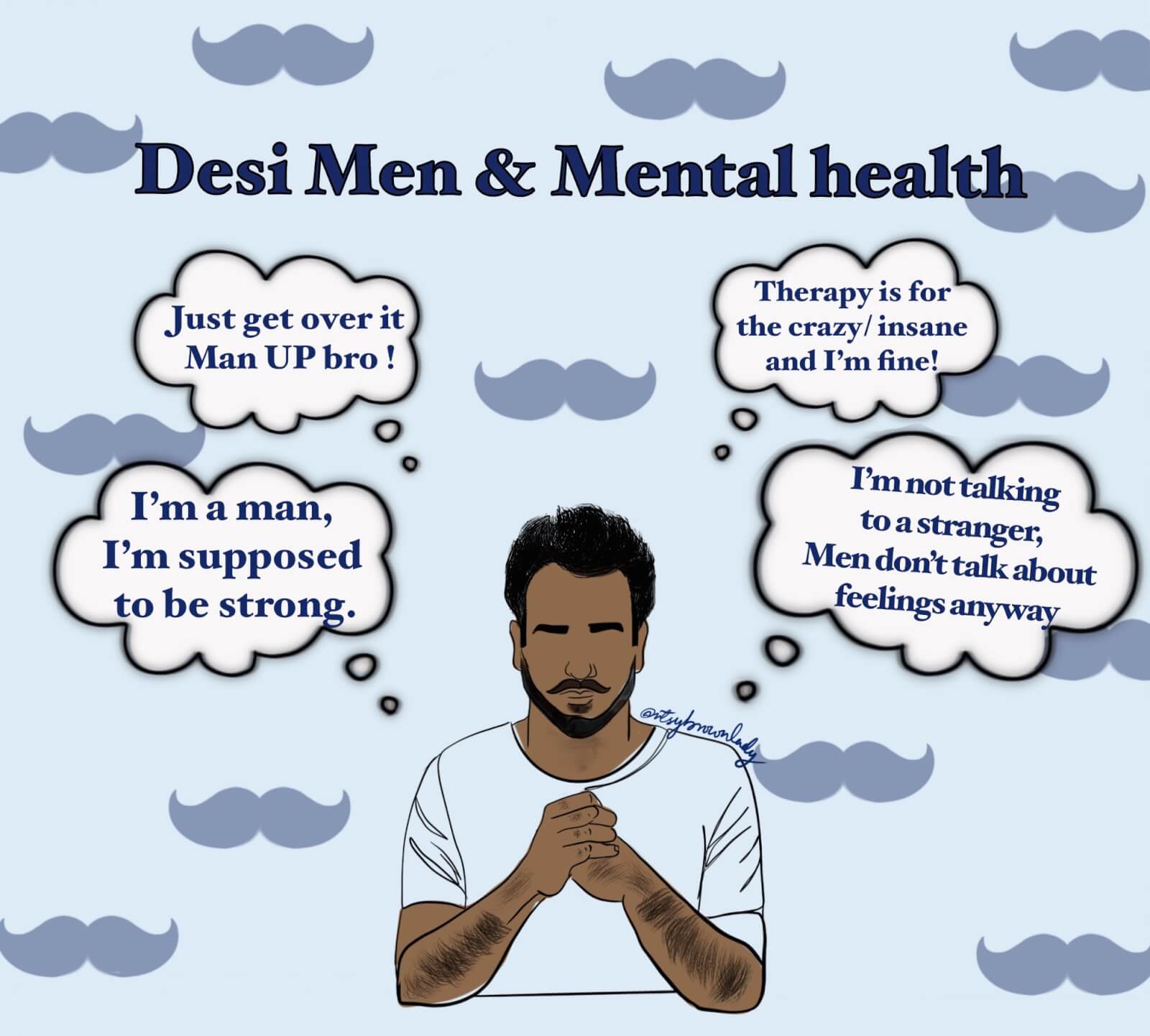
If we were to focus on men of Indian origin, there is the trope of the ‘Good Indian Son’ who is always there for his parents in their time of need especially during their later years. He’s stoic and ready to fill his father’s shoes and the guilt the son experiences is ten-fold if he is the only son.
These beliefs bleed into raising sons where the mental conditioning focuses on his role of being the support system to ageing parents, rather than ever seeking support for his own distresses. That, coupled with these other reasons contribute to poor outcomes among South Asian men seeking mental health support services.
Lack of vulnerability
From an early age, boys are exposed to what being a man is all about, including suppressing vulnerable parts of themselves. In India, often the use of the Hindi phrase “Yeh kya ro raha hai ladkiyon ke jaise/ Why are you crying like girls?” not only sends messages about gender expectations and norms it also leaves them having none to little respect for their own or others’ vulnerability.
Thus translating the message that anyone displaying vulnerability is weak and so, men inherit an inner compass that shames not only themselves but also anyone around them that is brave enough to be vulnerable.
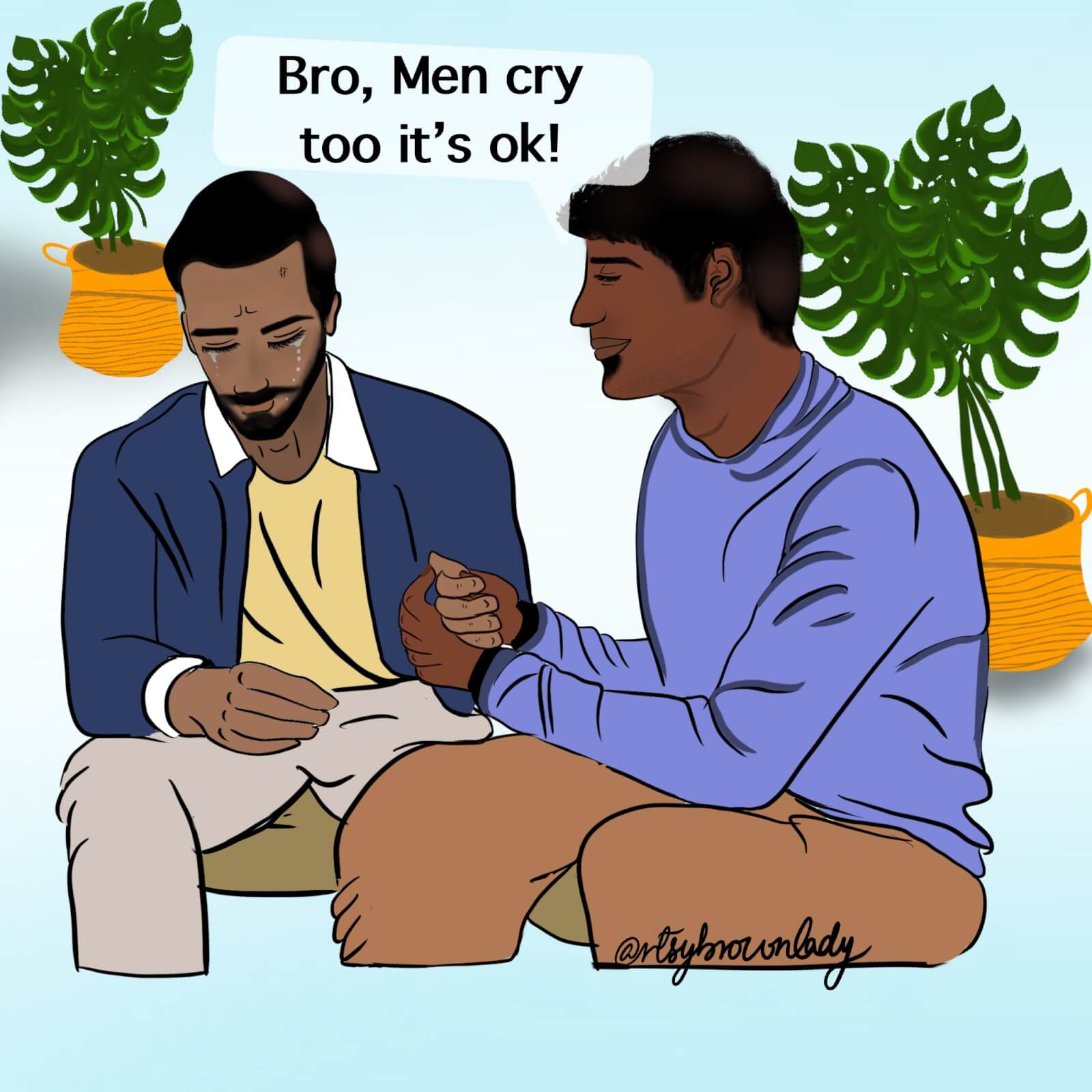
Unfortunately, most South-Asian men aren’t even taking the first step to seeking help. A 2016 study done by Queensland Health on community profiles for healthcare providers shows clearly how these services are underutilised by South Asian migrants, with stigma being a consistent barrier in accessing these services.
Culturally competent services also see inequity of gender in their self-referrals, with most clients identifying as a woman. The question is whether it’s because of stigma, or self set expectations or simply because of being afraid to be judged for not knowing what the experience might bring up for them. It’s hindering men’s mental health, relationships and even life expectancy.
Lack of knowledge/resources
In 2022, Jagesh the founder of Shakti Melbourne ran social circle groups for South Asian men in Dandenong, Melbourne and found that not only are they more hesitant to reach out to services, they are unaware of the appropriate services. That social circle was the first safe haven in finding appropriate mental health services for many of those who attended.
Societal norms for Indian men also encourage men to rely heavily on ‘liquid courage’ to be expressive. Often,men find that a glass of beer gives them permission to be open about their issues.
Luckily some are noticing the issue with such dependency. Another conversation that came out of Shakti Melbourne men’s circle was how many South Asian men were able to self-identify that their heavy drinking was an issue and hence noticed that as a sign of struggling with emotions. This reliance on alcohol is deeply ingrained and normalised in South Asian cultures, and perhaps it will take longer than expected to shift this.
Lack of language
Karan Mehta, chairperson of Indian Student Association in Melbourne believes that while there’s the massive need for counselling, a barrier that continues to be is the lack of appropriate language. For so many they struggle with a lack of language around how distressing their emotions are feeling. This could also be backed with perhaps even lower levels of emotional intelligence and inability to reflect on one’s own emotional needs.
Change begins at home. Emotional resilient men are formed when we, the parents, the friends, the partners and the society makes space for open conversations about mental well-being.
Stigma and shame end when acceptance is provided with open arms. If men have room to express some of these internal struggles, and their mates stop offering them that glass of beer and instead provide them a space free of judgement for having emotions, we will see change.
When parents are willing to do and acknowledge their part in raising an emotionally intelligent and present son, we will see change. We are already seeing a shift occurring. The numbers are low but there are men accessing services and sharing their experiences and with that step,reducing stigma for other men.
Out of COVID, more involved fathers were born which gives us hope of a newer generation of men more in touch with their emotions.
While organisations like Shakti continue their great work, we all can do our part by being open, forgiving and understanding of the many complexities that affect men’s mental health and hope for better outcomes for their well-being.
Culturally competent mental health services to seek help from:
https://www.shaktimentalhealth.com/south-asian-practitioner-list
Gurvinder Kaur is a counsellor, a lived experience advocate and an artist. She is deeply passionate and is actively vocal in raising awareness around issues affecting the South Asian community
As a first generation migrant she’s had the intersectional experience observing first hand the effects of patriarchal norms in the South Asian community affecting the men in her life and she continues to work with men as a counsellor supporting the growing need to address men’s mental health concerns. Follow her on @artsybrownlady for her art practice. Images in this story were created by her.