வீணை என் மனதிற்கு மிகவும் நெருங்கிய வாத்யம். இது என் அம்மா, பாட்டி மற்றும் தாய்நாட்டின் கலாச்சாரத்தை நினைவுபடுத்துவதோடுகூட என்னை சமூகத்துடனும் இணைக்கிறது. வீணை இசைக்கும்போழுது என் மனத்தில் ௐரு சாந்தி நிலவுகிறது. சிட்னியில் உள்ள வீணைகலைஞர்கள் பற்றி எழுதுவதின் மூலம் ஆஸ்திரேலியாவின் வீணை பாரம்பரியத்தின் ஒரு பகுதியை இந்த தொடரில் அறிமுகப்படுத்துகிரறன்.
The veena is a dear instrument to me. It holds cultural memory of my mother, grandmother and homelands, it links me to community, and of course, is the source of intense artistic joy. This series of writings presents part of the fabric of the tradition of veena in Australia by introducing readers to the stories of veena artists in Sydney.
Veena artists in Sydney are few and far in between. I first heard Saumya perform in 2020 at Srirangam, a dance recital. The skill and emotive power in Saumya's musicianship lingered in my mind for many months. I am delighted to continue weaving Sydney’s veena fabric with the story of a young, vibrant, Sri-Lankan-Australian artist.
Tell us about yourself
I am Saumya Sritharan, a third-generation Veena player in my family, beginning my initial training under my mother, Smt. Varalakshmi Sritharan, a Veena artiste in Sri Lanka and Australia. I was later privileged to learn from Gurus Vijayalakshmi Narayanan, Kalyani Ganeshan, Shri Rajesh Vaidhya and Shri. Anantha Narayanan in India. I perform regularly in Carnatic concerts, for dance arangetrams and film music (with a band - Eastern Empire). Apart from the Veena, I am also a trained classical dancer, a singer and a harmonium player. I am a practicing pharmacist outside of my music interests.
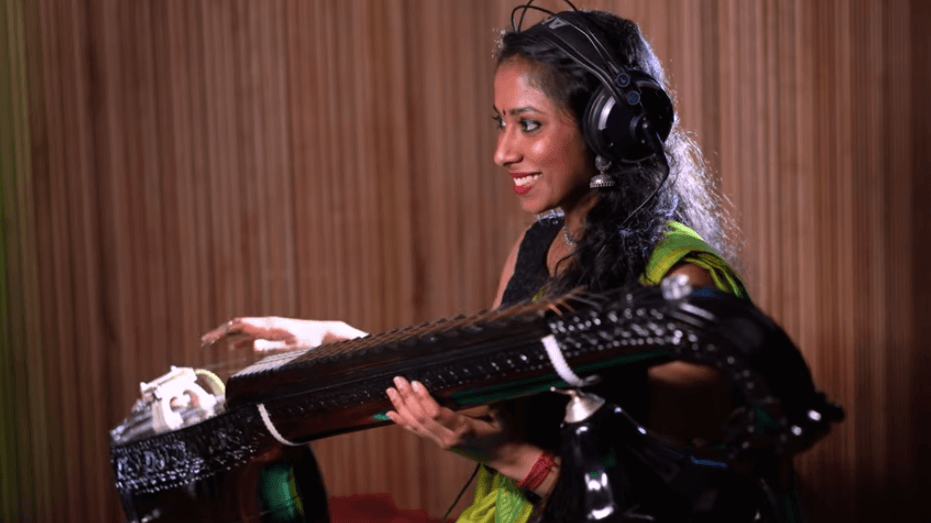
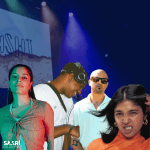
Saumya in a video for Eastern Empire. YouTube link to video here. Credit: Eastern Empire
Why the veena?
When I was younger, I didn’t really understand the value of music and what it could bring to an individual. Growing up in a family with a deep-rooted practice of music, this wasn’t easy as I used to be a shy little girl who would hide in a corner frightened whenever someone asked me to sing. I never took music seriously! However, growing up and watching my mum perform and teach, truly inspired me and showed me that music is not only about standing in front of a packed audience but it is an art form that can bring joy and happiness to the inner self.
Share a particularly momentous occasion/story/conversation/performance in your journey as a vainika – why was it an important moment, how did it impact/transform you?
It was after many years of pleading by my mother, at the age of 12, that I started properly learning the Veena. I began performing with my mum’s students at regular concerts. A few years later, I started taking lessons from my mother’s teacher and completed my Veena Arangetram with my brother on flute in 2014. It was then that I realised that knowledge and practice of this intricate art form is never ending. Many days and nights are spent practicing and it is always a great feeling to walk off stage having learnt something new, having accomplished something different each time and receiving invaluable feedback and advice.
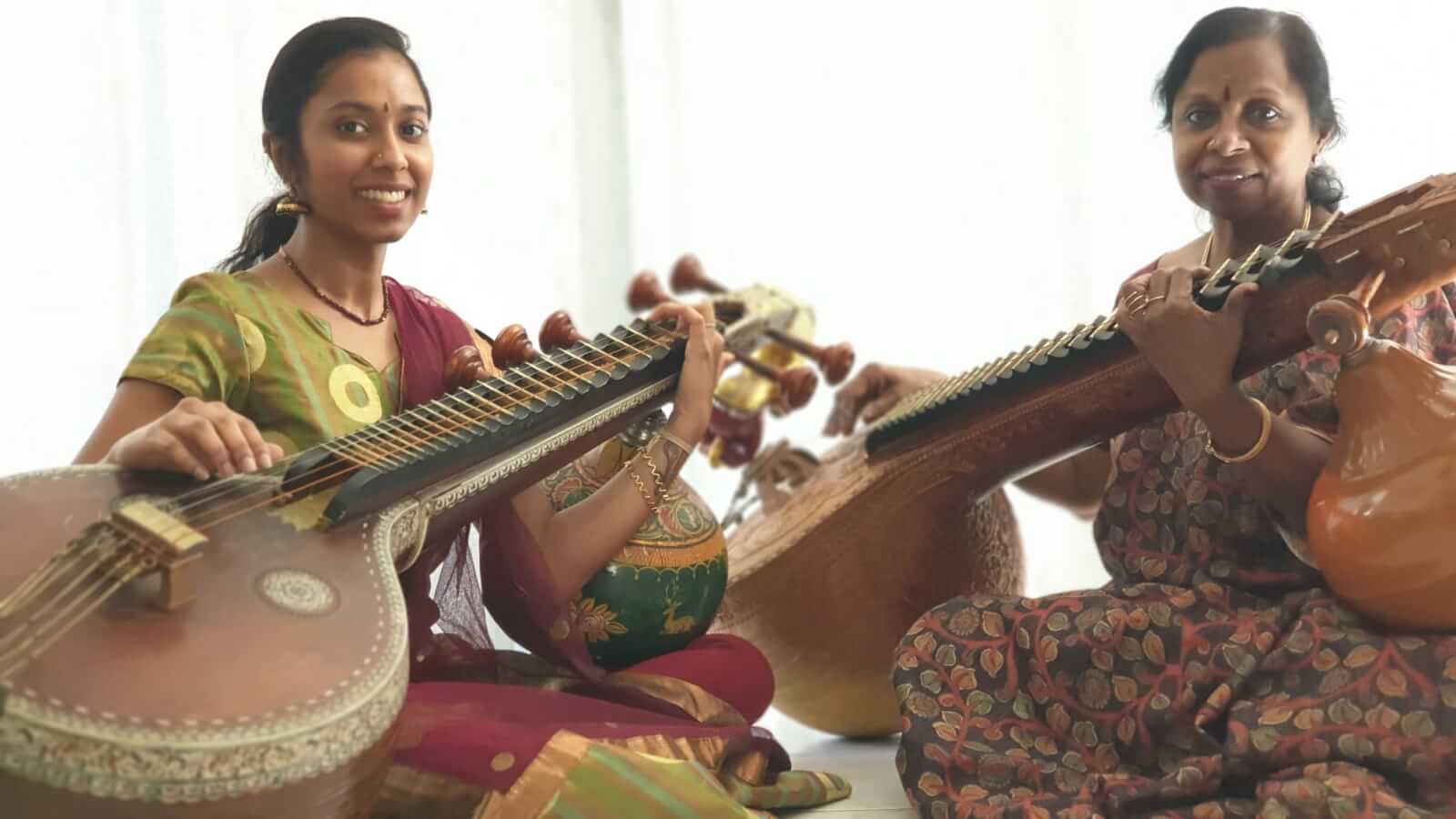
Saumya with her mother Varalakshmi Sritharan. Credit: Saumya Sritharan
What challenge, struggle or failure have you faced in your music practice?
At times it is challenging balancing study, full-time work and performance. It often does get overwhelming finding the time to practice whilst having exams or work. But something I’ve learnt over the years is that I can accomplish anything by having faith in myself! I feel lucky to have music as a release from the stresses of life even though it can get hard to find time. There is always time to be found! It’s truly a blessing from g\God for being able to play this instrument and I am thankful to my family and teachers for nurturing me through this art form. Now, I definitely cannot imagine my life without music.
What is one of your favourite pieces of non-Carnatic music and why do you like it?
I studied music as one of my HSC subjects and for one of my core performances I played a jazz piece, Take Five composed by Paul Desmond. I led this work on the veena, with my teacher and brother accompanying on the piano and flute. I thoroughly enjoyed this as it was completely outside my norm. I incorporated the Carnatic style of playing into jazz. It was a great learning opportunity as I still draw on these skills today in my daily practice.
How do you think about your music in relation to living on Aboriginal lands?
To connect my practice of veena to living on Wangal lands, I would like to research stories that were shared amongst the Wangal people and composing tunes that could be played on the veena with a voice-over narration. I would need to be mindful of protocols, such as whether composing music using a different cultural instrument would offend the Wangal people.
When I think of the veena, it always makes me feel connected to my traditional roots and culture of India, from where the veena originated. Many traditional compositions in Carnatic music reflect mythologies related to our gods. In Aboriginal traditions I understand that music and stories, which are told by the elders, are passed on through generations to maintain connection to lands and ancestors, which is how I feel about Carnatic music! Being Australian-born, playing the veena allows me to connect to my culture and ancestors.
Follow Saumya Sritharan on Instagram and listen to her recent work here on Youtube.
For the Veena Series on SAARI Collective, Indu wrote a preface and spoke to four veena artists from Sydney. Read the preface from the link below and the four profiles are linked at the bottom of the preface.
The Veena: Wayfinding New Homes on Ancient Lands
Indu Balachandran is a Lifelong Atlantic Fellow, musician (veena) and cultural producer, and a senior executive and board director in the social-purpose sector. You can connect with Indu on LinkedIn.