வீணை என் மனதிற்கு மிகவும் நெருங்கிய வாத்யம். இது என் அம்மா, பாட்டி மற்றும் தாய்நாட்டின் கலாச்சாரத்தை நினைவுபடுத்துவதோடுகூட என்னை சமூகத்துடனும் இணைக்கிறது. வீணை இசைக்கும்போழுது என் மனத்தில் ௐரு சாந்தி நிலவுகிறது. சிட்னியில் உள்ள வீணைகலைஞர்கள் பற்றி எழுதுவதின் மூலம் ஆஸ்திரேலியாவின் வீணை பாரம்பரியத்தின் ஒரு பகுதியை இந்த தொடரில் அறிமுகப்படுத்துகிரறன்.
The veena is a dear instrument to me. It holds cultural memory of my mother, grandmother and homelands; it links me to community, and of course, is the source of intense artistic joy. This series of writings presents part of the fabric of the tradition of veena in Australia by introducing readers to the stories of veena artists in Sydney.
Yoganayaki Thanikasalam moved to Australia from Sri Lanka in the late 80s. She was one of the first veena artists and teachers in Sydney. Her reverence for the instrument and her encouragement of young veena players has been a critical part of the ecology of music in Sydney. This interview process was a beautiful one in itself. Yoga aunty preferred to respond to the questions in her mother-tongue – Tamil – so that she could express herself more fully. Her daughter Sai Sathya graciously offered to translate her interviews into English and in this process, more relationships were built and strengthened. It takes a village, after all.
Tell us a little bit about yourself
My name is Yoganayaki Thanikasalam. I am a Veena artist currently residing in Sydney, Australia. I started learning the Veena at the age of eight and graduated from the Central College of Carnatic Music, Chennai, in 1969.
Why the veena?
My father was a prominent Lawyer in Jaffna, Sri Lanka and was a keen Veena student. Due to his busy work commitments, he was not able to pursue his learning. I was inspired by his commitment and started learning the veena. I was also fascinated by this large ancient instrument for its beauty and the stunning sound it was capable of producing.
Share a particularly momentous occasion/story/conversation/performance in your journey as a vainika – why was it an important moment, how did it impact/transform you?
My Veena audition and interview before being admitted to study at Central College: the eminent musicians, the late Mr Sandhyavandanam Rao, T. N Krishnan and Kalpagam Swaminathan were on the selection panel. I was selected on the spot and was chosen to complete the three-year undergraduate Sangeeta Vidvan course, which I completed in two years with a Gold Medal for the best performance. This enabled me to pursue the pedagogy course the following year.
During my undergraduate study, Brindhamma (the great Veena Dhanamal’s granddaughter) who was well known for her rendering of Padams and Javaliis was also one of our teachers. She used to walk up to our hostel and borrow my Veena to perform. Though I probably did not appreciate how special this was in my late teens, I often reminisce about these experiences after leaving the College.
Learning under the watchful eyes of the eminent was a humbling experience and inspired me to never stray away from the classicism and the authenticity of our ancient music.
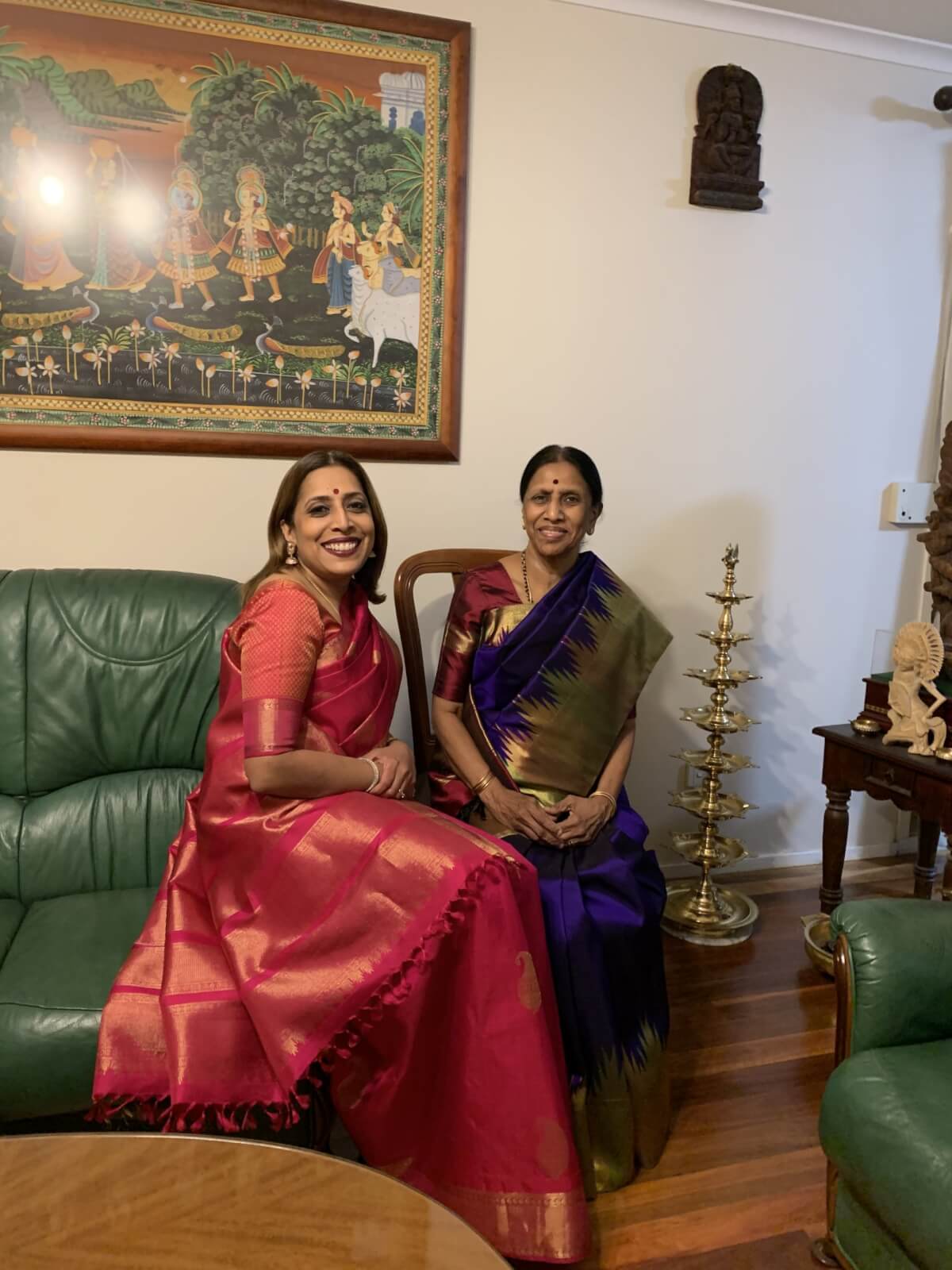
Yoganyaki Thanikasalam with her daughter Sai Sathya.
What challenge or struggle have you faced in your music practice?
I lived in Sri Lanka prior to migrating to Australia in 1987. Living in Sri Lanka during the civil war and not being able to perform and travel was a struggle. I lived in Jaffna in the northern part of Sri Lanka and had to travel to Colombo for Radio Ceylon and Rupavahini (the national broadcaster) for studio recordings. This was a challenge and I was not able to do this for a period of more than ten years. I felt isolated from fellow musicians and was not able to grow much as a musician during those challenging years. It was during this time that I learnt my Veena Guru Kalyanakrishna Bhagavathar has passed away while listening to a special broadcast of his concert on All India Radio. I was devastated to hear this news and ceased my learning until I migrated to Australia.
Anything else you would like to add?
I am grateful for the opportunities Australia has given me and for the fact that I am able to continue my music practice and teaching. I don’t take for granted the fact that I am still able to travel to India to study under eminent musicians who are in their eighties. It was in Australia, that I came under the tutelage of Trivandram Venkatraman and continued learning under him by travelling to India annually until his passing.
What is one of your favourite pieces of non-Carnatic music and why do you like it?
I enjoy listening to Bhajans especially Sai Bhajans rendered in Prasanthi Nilayam Puttaparthi.
I like Bhajans for the spiritual nature of the music and also find this type of music helps me connect with my inner voice in the same way the veena also helps me connect. Our conscience unlike our mind has travelled with us through different births and I truly believe the Veena has helped me with my spiritual practice.
How do you think about your music in relation to living and playing on Aboriginal lands?
I feel privileged to live and practice music on Aboriginal lands. Hearing the Didgeridu (known by other names in different languages) being played live for the first time live was truly special, at a devotional gathering. As the Didgeridu player started playing, the singers started chanting Aum (which we know as the primordial sound of creation) was one of my greatest spiritual experiences. The Didgeridu was in perfect harmony with the chanting and the Tambura - a truly special and awe-inspiring moment.
I learnt that the Didgeridu was made by choosing a tree after knocking on it to see whether it had been hollowed out by termites. Then a ceremony would be performed for the ancestral spirit asking for permission to give up the tree before it is harvested for the instrument to be made. I found this to be very similar to how the Veena used to be made from Jackfruit trees from temple compounds. In a way it feels like the veena found me in the same way Australia chose us and gave my family a safe place to practise and teach my art form.
How do you think of the veena linking you to the past and future?
I started learning the veena after being inspired by my father’s dedication. I consider myself lucky to have been able to teach my daughter and grandchildren. I recently shared the stage with my daughter Sai and my grandson at the Thyagaraja Aradhana and on occasions as well as while rehearsing at home, I get the sense of the past and the present all intertwined and you truly experience the fact that every experience is meant to be.
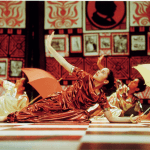
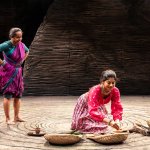
Teaching the Veena has allowed me to be the bridge that connects our history to the future and I am truly grateful for the fact that I am able to teach students after all these years. I also hope my students will stay dedicated to this beautiful instrument and are able to share and promote it to a wider audience. I was very happy to see Indu perform at Belvoir as part of The Jungle and the Sea and feel that your generation will keep this instrument alive.
You can hear Yoganayaki Thanikaslam on Radio Ceylon at this link.
For the Veena Series on SAARI Collective, Indu wrote a preface and spoke to four veena artists from Sydney. Read the preface from the link below and the four profiles are linked at the bottom of the preface.
The Veena: Wayfinding New Homes on Ancient Lands
Indu Balachandran is a Lifelong Atlantic Fellow, musician (veena) and cultural producer, and a senior executive and board director in the social-purpose sector. You can connect with Indu on LinkedIn.