Acclaimed creator of Counting and Cracking, Sri Lankan Australian playwright S. Shakthidharan speaks to emerging playwright Chenturan Aran about their shared ancestry, justice, writing, and the strength of South Asian women.
I’ve never read a script that felt more ‘alive’ on the page than Counting and Cracking by S. Shakthidharan. His words have a radical specificity, whether it’s a Tamil boy in Western Sydney, 2004, waxing poetic about his Nokia 6630, or the swift Sanskrit incantations of a Hindu priest delivering ancient funeral rites.
However, I believe Counting and Cracking feels even more alive, because as an Australian-born Sri Lankan Tamil, the play gives three dimensional detail to the hushed moments that ruptured our homeland and family trajectories. Moments like the Sinhala Only Act in 1956 and the Black July Riots in 1983, which ignited a twenty-five year long civil war between the Sri Lankan Government and the Tamil Tigers.
The ghosts from Sri Lanka’s civil war haunt but remain distant for the children of migrants. I’ve seen glimpses in the remembrance photos of my granddad and uncle, which have sat in our family prayer room since before I was born. It’s in the heartbroken conversations between my elders reflecting on the failure to establish a safe Tamil homeland. Most of all, it’s in the silences, the repressed memories of a happy Sri Lanka that my parents push aside to forget the violence and loss that accompanies looking back.
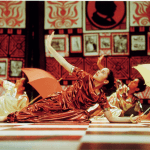
Counting and Cracking follows the journey of a Sri Lankan-Australian family over four generations, from 1956 to 2004. A cast of sixteen actors illuminate the ghosts of our personal mythologies. Shakthi’s work speaks to a truth we all suspect - we are not just the present moment, we are made of a universe of history, which is calling to be seen. When we see it, we are rewarded with a clarified identity.
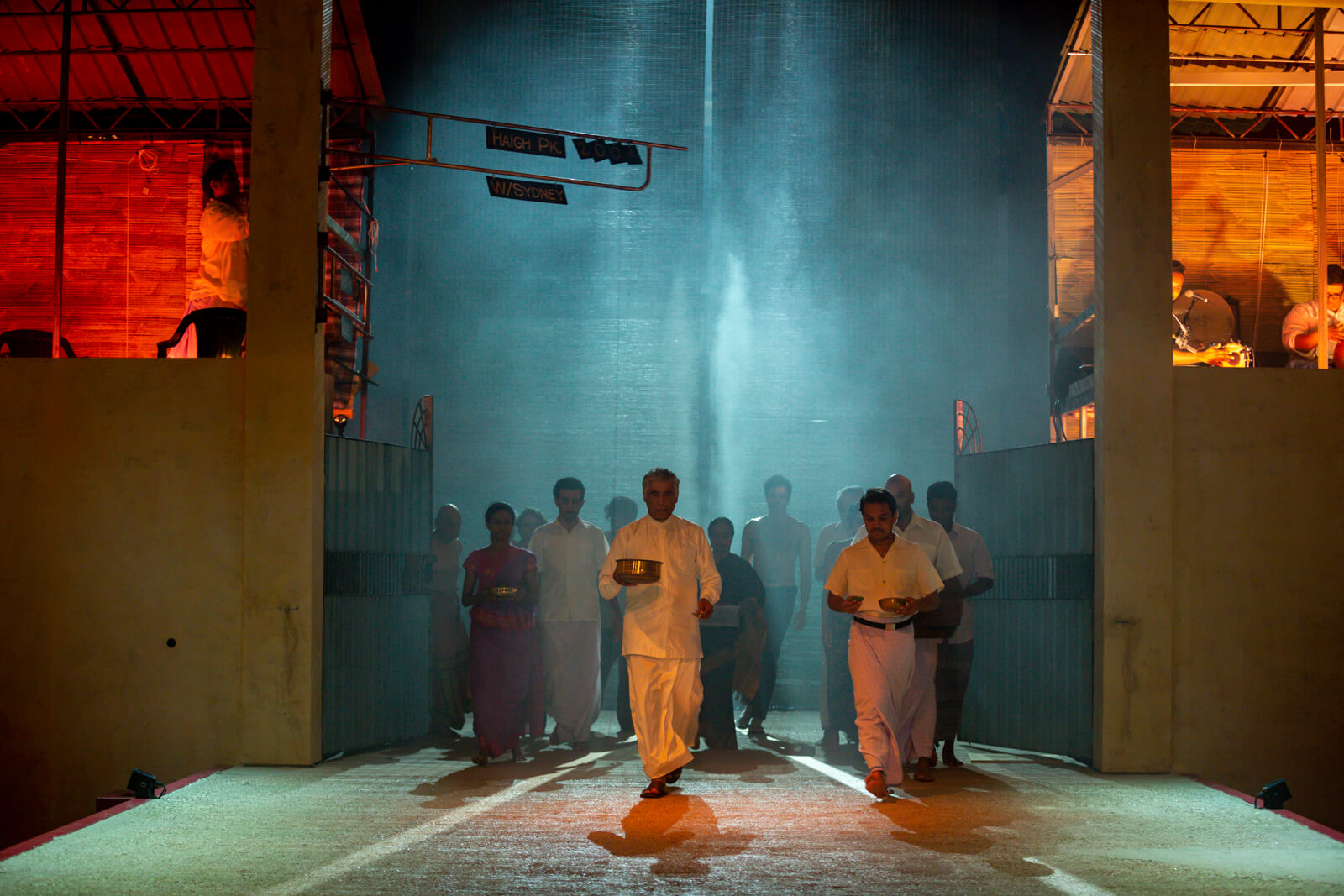
Counting and Cracking at Belvoir Theatre. Photo by Brett Boardman
But the play goes further than helping Sri Lankans clarify their identity, it helps rebuild a shared identity between two groups, Tamil and Sinhalese. The work returns us to an innocent intuition - people are good and we don’t want to be divided anymore.
"I believe people are fundamentally good and that they have a reason for what they're doing, which means that we can make sense of everything," says Shakthidharan. He believes truly understanding our differences can dissolve the distance of those differences.
Here’s my conversation with the playwright, S. Shakthidharan, where he talks about the difficult work of being a conduit for differing Tamil and Sinhalese views, his relationship to his own name, finding courage from First Nations people, and how finding a pathway to justice is more important than simply spotlighting the injustices.
When I read Counting and Cracking, I noticed how surgical you are in terms of how you list the atrocities committed by the Sri Lankan government and the Tamil Tigers. How you deliver those facts can easily put a group off-side depending on their beliefs. It’s a tough job. I don’t envy you.
It is surgery and the work is constantly changing.
There's a beautiful relationship between the community and this piece. Everything in this show is something that happened to someone. When the community responds, they are responding to their own truths being in their face. The weird position I'm in is that I'm the conduit for how audiences feel about other people in their community saying things they don't like.
I believe stories allow people, through entertainment, to see those viewpoints and process them. You may get those viewpoints thrown at you on social media or at a rally, and those things have a place in our society, but they tend not to lead to respectful discussion.
There are some really strong Tamil Tiger supporters who have engaged with me in a dialogue over the course of Counting and Cracking and the Jungle and the Sea, whereby they've made clear what they don't like about the works, but also made clear how much they appreciate the attention it's bringing to what happened to Tamils. We're listening to each other. I've met with them and incorporated their feedback into the current version of the show - as I have with many other Sri Lankan community groups. We’re working together and we're learning that disagreement is part of that process.
That's where the big wins are.
May 18 was Tamil Remembrance Day. When I see images of my people being murdered, it makes me angry. In my conversations with Sinhalese friends, I tend to spotlight the injustice. You’ve said in the past it’s important to go beyond spotlighting injustice and think about the pathway to justice. What would that conversation look like for Sri Lankans?
I think that each person is allowed to have their own way of responding to this stuff, which is so heartbreaking and is part of our decisions around how we grieve.
I don't feel we live in a world where Sri Lankan Tamils can find justice or equality, just on our own. I wish we could. In order for us to have power and respect, we need a certain proportion of Sinhalese Sri Lankans to feel that way too, and there are very fierce, Sinhalese collaborators I've worked with who support that.
I think it's really important for the Sinhalese community to have a safe space to face some uncomfortable truths. Why did so many Sinhalese Sri Lankans vote for Bandaranaike all the way up to Rajapaksa? Why did so many of them understand in their guts that what happened in the 1983 riots was not right? Why didn’t they stand up and condemn the politicians of the day for their involvement in it?
It's okay for us to talk about this. It's okay for us to appreciate our differences. We are stronger together. This can put us Tamils and Sinhalese in a combined community which utterly condemns the actions of politicians who seek to divide us.
We have more in common with each other than those people who seek to say that we don't.
This is a play about how politicians seek power by dividing people, and how that division plants seeds for violence for generations. You said it was relevant when the play opened in 2019. Does it feel more relevant in 2024?
Sadly, it feels more relevant. The pressures of migration, climate change and our economic systems don't seem as stable as they did post the Second World War. It’s ripe for leaders to use the tactics of division to gain power.
At what point do we recognize history's patterns and become resistant as a culture to messages of division? Because I don't think we can stop politicians from saying them.
I do believe that people are good. The vast majority of people do not want violence and do not want political division.
What I love about this show is the way it contrasts communal life in Sri Lankan with the isolation in suburban Australia. Your work viscerally shows the loss of communal experience when people leave their homeland. Do you think the loss of the communal experience is making it harder for people to fend off the politics of division?
The reason community life is so annoying is because people who have different truths to you are in your face. An individualistic life allows us to be more psychologically and intellectually comfortable. It allows us to go, “What I believe is what I believe, and I'm going to sit on my little patch of Earth and believe it.”
The Sri Lankan Tamil community has so many different points of view, and we should not be ashamed of that. When faced with discrimination, turning into oppression, turning into the beginning of genocide, how can you expect a body of people to react in the same way?
It's not going to happen.
I wish we could find a way, with our Sinhalese brothers and sisters, to appreciate that we have different reactions, but our common goal of remembrance, justice, and peace is more important. I believe it’s more important to understand the reasons for why people are doing what they're doing, than to argue endlessly about who is correct.
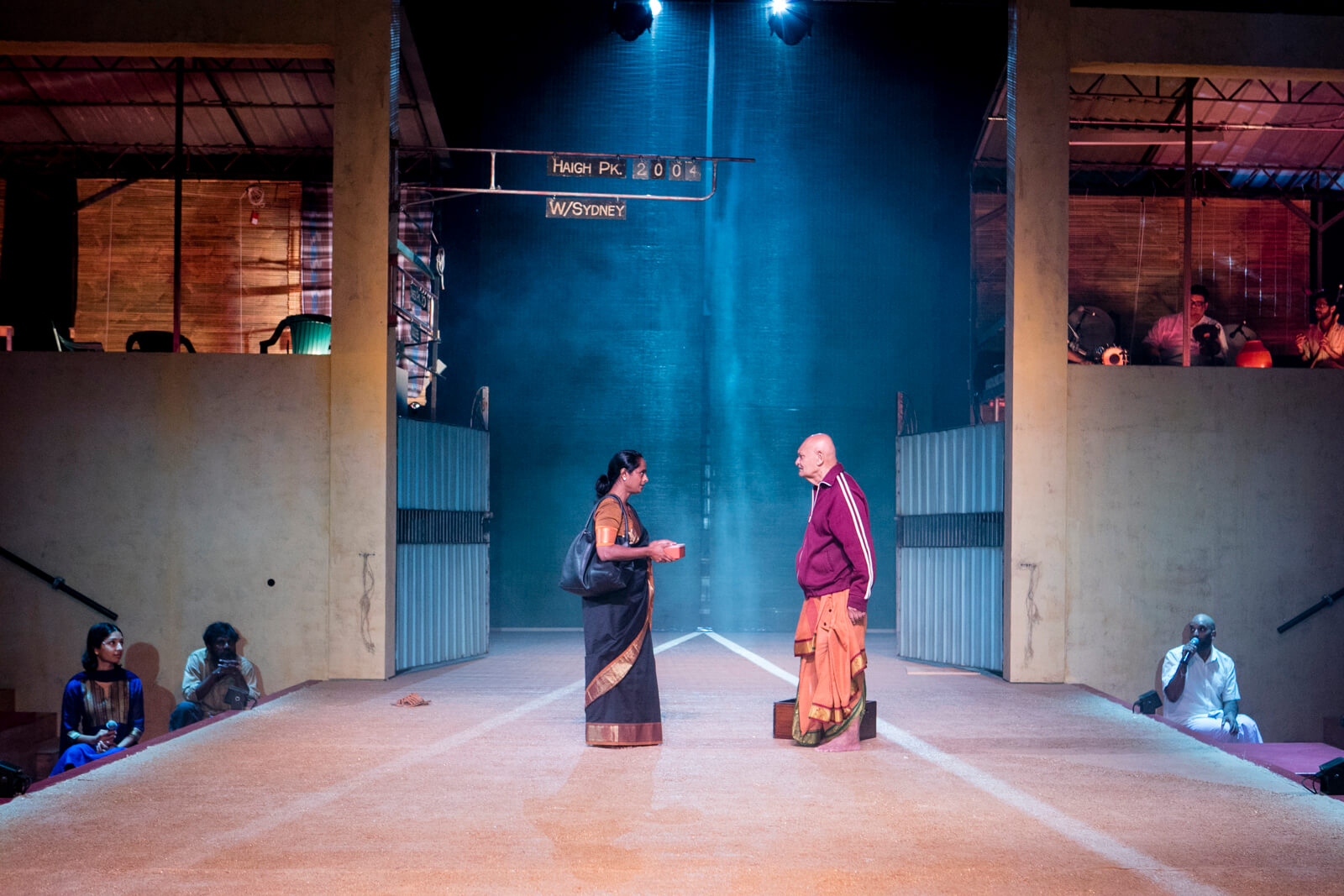
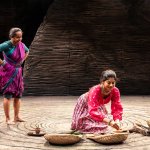
Counting and Cracking at Belvoir Theatre. Photo by Brett Boardman
The first time I saw a Yolŋu person in media was when I saw an installation for Ten Canoes (a 2006 Yolŋu-language film set in Arnhem land) at ACMI. My first reaction was, “Wait, is that periappa (Tamil word for uncle)?” Now I see a likeness between Tamils and Yolngu people all the time.
100%, I agree.
Why did you feel like it was important to include an Aboriginal character with Tamil ancestry from a migration that occurred 4,000 years ago?
I have a dear friend, Rosalie Pearson. She's a Yolŋu woman, and I had a beer with her once and I told her, “I was reading this article this morning about how they tested the DNA of Yolngu people, and there's Tamil ancestry in there. And she was like, “That was my family.” Here I'm having a beer with my friend in modern Australia and in my head, I’m like, did our ancestors meet on the shores of northern Australia? Has our DNA been in contact for 4000 years?
Australia's a part of Asia. We have this enduring long connection with Asia, and why can't that connection be the place that migrants find their full selves from? Why can't that be the place we gird ourselves and find our strength?
The First Nations people of this country are where I have been able to find the courage to offer my full self in public life. It's a really vulnerable act. If you spend time with black fellas, they've been doing it for a long time and they include you in their embrace. It’s a gift and a privilege.
I don't think Siddhartha, the character of the young man, is going to find the courage he needs from Anglo-Celtic society in Australia.
I feel like as children of migrants, we weren't given a connection to the Australian landscape.
Lankans, weirdly, so many of them are horrible at swimming, even though we're an island country. They’re all in the suburbs in Australia. Geographical decisions have taken us away from a connection to the land.
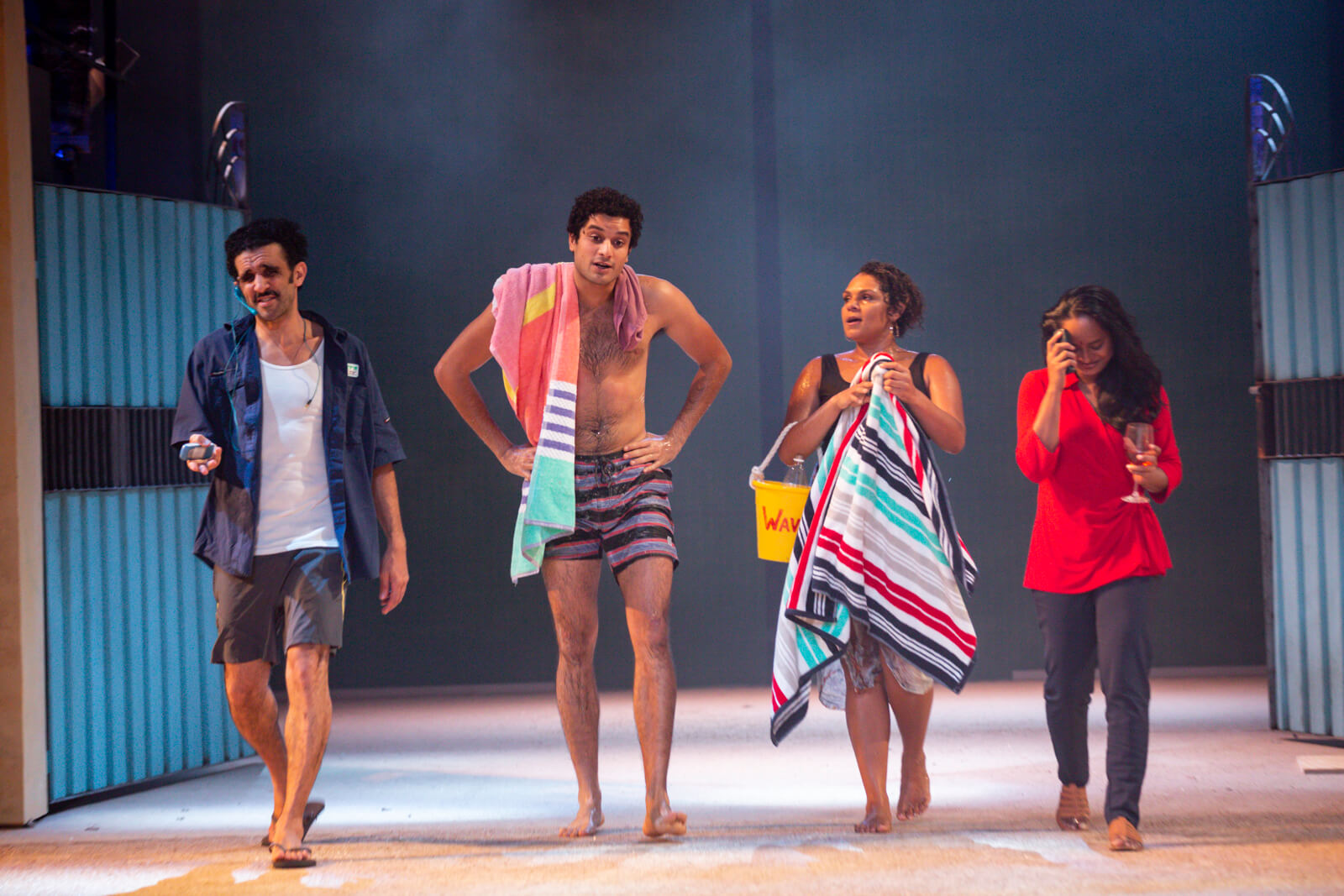
Counting and Cracking at Belvoir Theatre. Photo by Brett Boardman
My friend recently named their baby Shakthi, and if you ask them what it means, they'll say ‘strength’. Shakthi also means the Supreme Goddess, or a fundamental energy in the universe, or an aspect of dualism: ‘Shiva-Shakthi.’ Like everything in Hinduism, it contains multitudes and contradictions. What does your name mean to you?
My grandmother gave me that name, Shakthidharan. Shakthi was a way of including the feminine power of Shakti inside a male name.
I grew up as an only child of a single mum, inside her Bharatanatyam dance company. I grew up around women. South Asian women who come from conservative Colombo or Jaffna, who are starting a new life in Australia have to be strong people. There are multiple systems trying to make them invisible. My mum is scary and shouts at me too much. But she's strong, and she's a survivor. That’s what my name means to me - to respect the fact that so many women have to be a bigger version of themselves just to be heard, and to constantly remember my grandmother's desire to put that spirit into me.
You’ve said mainstream institutions distort the stories of people in migrant communities. As a writer, I’m reflecting on whether I’ve internalised that distortion? What limits have I put on my imagination? What are the stories I really want to tell? Do you have advice on how artists can truly listen to themselves?
The first thing is to make a decision to trust yourself.
The image you put out to the world is what people think you're offering. If you pitch something that isn't you and it goes well, you're kind of screwing yourself because they're going to want more of that. It's incumbent upon us to work from our instincts, because that's the version of us we want the world to want more of.
Then I think it's really important to know what your values are. I've said some of mine to you in this interview. I believe people are fundamentally good and that they have a reason for what they're doing, which means that we can make sense of everything. I believe we are richer for understanding the differences between us.
We’re not connected to the land our people built or were buried in. We're disconnected from our ancestors. You've said that this story is you going backwards to go forward. Is there something innately healing about stretching your identity further back?
I would push that even further. I don't think we know who we are unless we know our past. I don't think the present really exists. The present is just an accumulation of the past. That is, every single second of the present is all the moments leading up to it. We're kidding ourselves that we can do anything without knowing our histories.
My mum was always against talking about the past because of what she saw during the 1983 riots, and she didn't know how to deal with the pain of leaving Sri Lanka. So she just buried it in a box. She was so against me doing this play because it meant bringing that buried wound out again.
The play has allowed her to think about all the good memories. To say, “my Sri Lankan identity is more than just that week in 1983. It's all of these things that are like a river of time that have made me who I am.” Her past is why she had the strength to survive 1983. Her past is why she had the strength to bring her baby to Australia and start a new life.
But we have to be careful. The show is very careful about the way that it carries people through that safely. If you do this kind of work without care then it's a horrible thing to do. Doing it with care is necessary.
This interview has been edited for length and clarity.
Counting and Cracking SAARI Community Tickets
S. Shakthidaran's Counting and Cracking plays a limited season at the University of Melbourne's Union Theatre from 31 May to 23 June as part of RISING; and from June 28-July 21 at Carriageworks, Sydney.
In celebration of South Asian creativity in Melbourne, we are pleased to offer the SAARI Collective's community 20% off tickets for performances between 2 and 7 June. Simply use the code SAARI when booking at rising.melbourne.
SAARI is hosting an intergenerational lunch in Melbourne to support South Asian creativity and the premiere of Counting and Cracking. Bring your family and join the SAARI community on 2 June. Free tickets here.
Chenturan Aran is a Sri Lankan Tamil Australian playwright and journalist. His plays have been performed at Melbourne Theatre Company and La Boite Theatre. His work explores memory, migrant families, and technology. Chenturan has also been published by The Age, SBS, South Asian Today, SAARI Collective and All The Best Radio. His latest work, ‘Cut Chili’, will be showing at Old Fitz Theatre, Sydney in July 2024.