It's the most wonderful time of the year.
When hearing those words, almost everyone attributes this description as an apt reflection of the Christmas season. Christmas trees decked out with shiny bells and baubles, tinsel and mistletoe, and, of course, fairy lights of almost every colour imaginable.
The irony is that I had none of these in my family home growing up as a South Asian kid. In fact, if anything, Christmas was often a historical story retold during family gatherings rather than a specifically cultural or religious event.
Despite my own misgivings about not celebrating “typical” Christmas traditions, I learned to appreciate the deeper meaning that took on greater significance in my later years of life.
A historical point of view
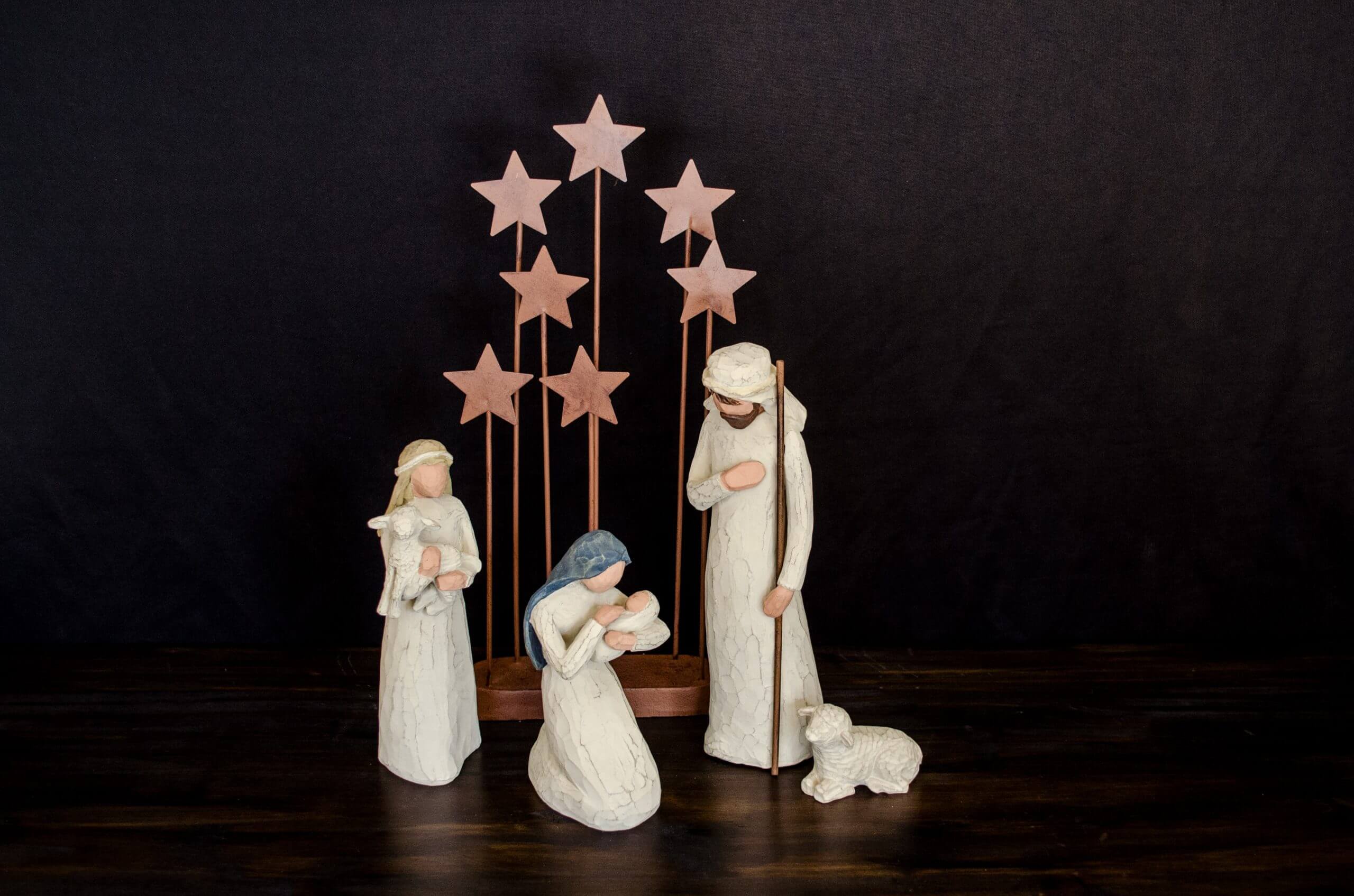
Image credit: Debby Hudson
For as long as I can remember, I grew up attending church, as I was raised by Christian parents. There was always some sort of nativity play or skit, and children often received gifts or books during our Christmas end-of-year parties. I still recall wondering why Christmas was the one celebration that both people in the church, and outside of the Christian faith celebrated, and decided, due mostly to my bewilderment, that I would find out for myself.
It is noted by most historians that Jesus Christ was born in the year 4 B.C. During this time, it is an interesting fact to point out that Christmas was not actually celebrated as a festival or significant event in history until several centuries later, in 336 A.D.
Most celebrations of Christmas often take on cultural appropriations, as do most festivals. The introduction of the legacy of Saint Nicholas (a.k.a. Santa Claus), the Christmas tree, Rudolf the red-nosed reindeer, and other Christmas fables have been celebrated all around the world.
But travelling back to the historical birthplace of Jesus Christ was, for me, an eye-opening moment that changed my perspective on the reason for the season.
Cultural changes
Image credit: Aaron Burden
Back in 2014, I had the opportunity to travel to Israel and Palestine as part of a study tour during my international development studies.
I still remember the day when our tour bus stopped outside the security border separating the two regions, and was amazed to find out that Christmas, during that particular time, was not openly celebrated in Bethlehem. Personally, this left me in a puzzling predicament – why celebrate Christmas at all?
Nonetheless, I still look back on that trip as a shifting point, mainly from a cultural celebration of Christmas to more of a historical outlook that I still hold to this day.
I recognised, on a much more personal level, that the factual importance of the birth of Jesus Christ outweighs the commercial celebrations, cultural appropriations, even the familial obligations of gift-giving and caroling. The centrality of that day standing in Bethlehem brought me back to the realisation that centuries ago, on the day Jesus Christ was born, most people did not fully understand the importance, nor celebrated the significance of that special day.
The day itself is also a point of contention for many; given the difference in calendar dates. Typically, in the Middle East, the use of the Julian calendar places Christmas on January the 7th; whereas in the West, Christmas is according to the Gregorian calendar, placing it on December 25th. Despite the difference in dates, the importance in the actual moment in time which Christmas signifies tends to bear more importance than the number itself.
Growing up in a South Asian home sometimes meant also adjusting to a “no-nonsense” household, where debating facts, arguing points of view, and justifying perspectives was not a common pastime. In fact, we were told to accept the facts and find out for ourselves why it was so. Education itself was more of a means to an end, and the ultimate purpose was to understand the meaning behind what we knew to be true.
For me, this was reason enough to find out for myself why certain traditions, such as Christmas, held most significance, and how it’s impact historically was just as important, from a personal perspective, to continue celebrating it for more than just another day.
Present Celebrations

Image credit: Debby Hudson
Fast forward to the present day in 2020, and things, again, look a lot different. In many countries, including here in Australia, Christmas will not look how it typically has in previous years. The outdoor caroling, fancy fireworks displays, and other festive events won’t be taking place. Most family gatherings will be limited, with many unable to connect with close friends or relatives under the same roof. It reminds me much what the very first Christmas may have resembled.
There's nothing wrong with celebrations in and of themselves, though from a personal perspective I believe there should be a more meaningful purpose to them. When celebrating a historical figure’s legacy, it begs the question of whether it was simply historical, or something more?
In my family, growing up South Asian meant we didn’t have Christmas turkey or seafood platters; we had curry and rice. We didn’t exchange candy canes or elaborate gifts; we had unwrapped presents in shopping bags near the foot of our beds on Christmas day. We didn’t stay up all of Christmas Eve watching Elf or Home Alone; we recalled memories of Christmas days gone by, and, if I was lucky enough to get a moment to myself, would curl up in a nook and read A Christmas Carol by Charles Dickens.
The one thing that remains constant through each Christmas celebration is the importance of a single gift.
Even though my parents could afford giving multiple gifts, they chose to give me one gift a year during Christmas time, as a way to highlight the importance of hospitality. I look back on those Christmas celebrations growing up with thankfulness, especially to my Indian parents, who, in their own unique way, taught me the significance of being grateful and being able to give generously to others.
In a similar way, the gift of Jesus Christ, who is known as God’s one and only Son, is the Giver of the gift of life; and is the reason why gifts are given during Christmas time. The gift itself is a symbol of hope.

Image credit: Alabaster Co
Hope personified
Christmas itself, as a Christian, is a symbol of hope. Just as Jesus Christ is the central focus of the Christian faith, it is also the reason why it remains a reflection of the most wonderful time of the year.
It is the reason why I have been able to celebrate Christmas with complete strangers, and also, close friends. The purpose of which has been remembered since 4 A.D. to the present day, and why it bears significance for the next generation, and the generations to come. The real meaning of Christmas is that the hope for a world in the midst of uncertainty is found not in a once-a-year event, but a reality that defines history.
This Christmas, I am thankful once again to be able to celebrate the 25th at my family home, but through all the festivities, I remember that day in Bethlehem, centuries ago, that still bears hope for a better tomorrow.
Joseph F. Kolapudi is a Brisbane-based writer. He is a Manager at ReachAcross, a Multicultural Ambassador for the Mental Health Foundation of Australia, a Boad member of Australian Refugee and Migrant Care Services, and is nominated as Young Community Achiever of the Year in the India Australia Business and Community Awards 2020. Joseph was SAARI's first official writer, and is a passionate changemaker.